Windsor Court Historic District

Why it's listed
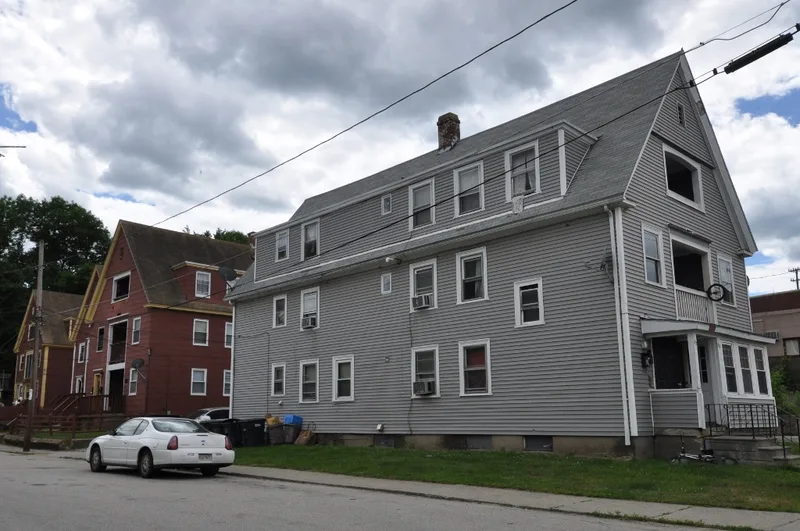
Windsor Court Historic District is a small group of three-family houses at North Street and Windsor Court in Southbridge, built in the early twentieth century by the American Optical Company to house its workers. The houses are variations on the triple-decker. The narrow three-story form was hidden by placing the third floor in a high-pitched front gable, so each house looks like a two-and-a-half story home, with long dormers added on both sides of the roof. Originally the houses were identical, wood-shingled, with a porch on each floor at the center of the facade. Some porches have since been closed in, but 8-10 Windsor Court keeps its original appearance. The land near Central Street stayed undeveloped until Central Mills released it after about 1908. The company built three worker-housing clusters in this period, and this was the densest. The district meets criteria A and C at the local level and retains its historic integrity.
Machine-generated summary. This summary was generated by a language model from the official nomination document and has not been reviewed line by line by an editor. It may contain errors. Check the source document before relying on any detail. Source: nomination document (PDF) · catalog entry. Generated October 2026 (model claude-sonnet-5-5, prompt v1.0-2026-10-29).
| Period of significance | 1904-1925 |
|---|---|
| Styles | Variation on the triple-decker three-family house |
| Areas of significance | Industry, Architecture |
| Acreage | 0.9 |
| Boundary source | NPS cultural-resource GIS polygon |
| Full listing page | Windsor Court Historic District (property record) |
What listing means for this property
This is a historic district. Buildings within its boundary are either contributing (they add to the district's significance) or non-contributing. Owners of contributing income-producing buildings can claim the 20% federal rehabilitation tax credit; homeowners should look at state credits. National Register districts impose no design review by themselves; a local historic district ordinance, if one exists, does (the difference explained).
General information, not legal or tax advice. Rules change; confirm with your State Historic Preservation Office or a qualified adviser.