Winchester Square Historic District

Why it's listed
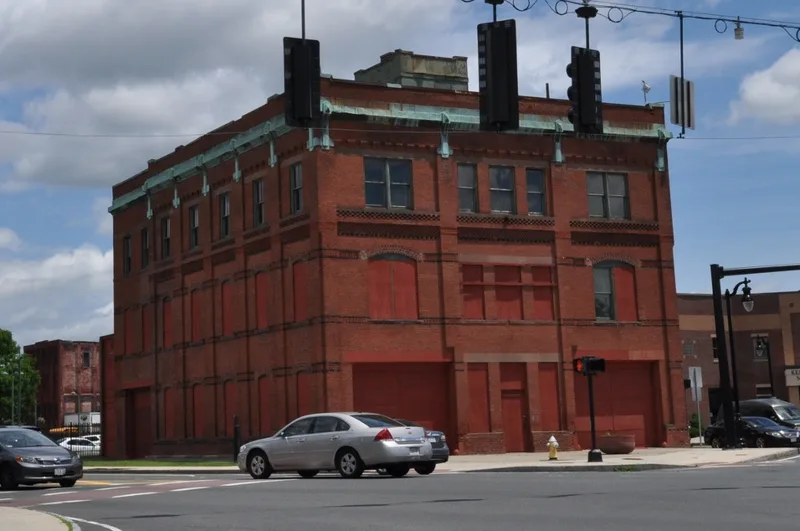
Winchester Square Historic District is a T-shaped industrial area at State Street and Wilbraham Road, east of downtown Springfield, Massachusetts. It developed around the Springfield and New London Railroad tracks laid in 1875, and its brick buildings range from one to six stories. Key structures include Armory Station (1875), the Winchester Square Fire Station (1886, remodeled 1915), the Knox Automobile Company building (built in stages from 1891 to 1910), and the large Indian Motocycle plant, which incorporates the Springfield Industrial Institute (1895) and the former Bullard Arms factory (1883). The district matters for three reasons. The Industrial Institute and later Mechanic Arts High School offered unusual technical education. Knox made motorized fire apparatus used in Springfield. The Hendee Manufacturing Company, later Indian Motocycle, was the first to build gasoline-engine motorcycles commercially in the United States and employed over 3,000 people at its peak. It is also the city's largest surviving group of turn-of-the-century industrial buildings.
Machine-generated summary. This summary was generated by a language model from the official nomination document and has not been reviewed line by line by an editor. It may contain errors. Check the source document before relying on any detail. Source: nomination document (PDF) · catalog entry. Generated October 2026 (model claude-sonnet-5-5, prompt v1.0-2026-10-29).
| Period of significance | 1875-1913 |
|---|---|
| Areas of significance | Industry, Commerce, Transportation, Education, Invention |
| Acreage | 5.4 |
| Boundary source | NPS cultural-resource GIS polygon |
| Full listing page | Winchester Square Historic District (property record) |
What listing means for this property
This is a historic district. Buildings within its boundary are either contributing (they add to the district's significance) or non-contributing. Owners of contributing income-producing buildings can claim the 20% federal rehabilitation tax credit; homeowners should look at state credits. National Register districts impose no design review by themselves; a local historic district ordinance, if one exists, does (the difference explained).
General information, not legal or tax advice. Rules change; confirm with your State Historic Preservation Office or a qualified adviser.