Wilson Mill-Old Burlington Road District

Why it's listed
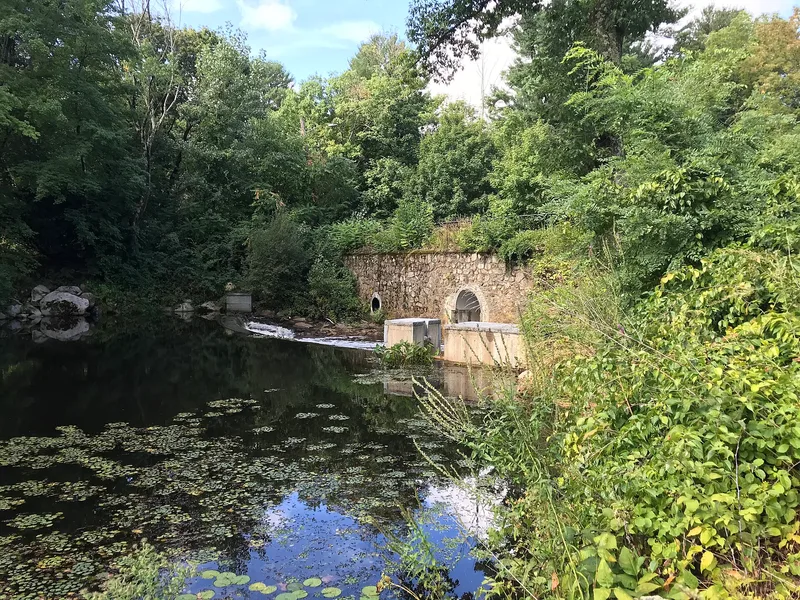
Along Vine Brook in Bedford, a small district of about nine acres preserves the site of a mill that began with John Wilson's corn mill in the late 1600s. Foundation remnants, a spillway, a stone-lined streambed, a stone arch bridge over the falls and part of the original millpond survive, though highway construction in the 1950s and 1960s removed much of the pond. The site later housed a paper mill, which burned in 1846, and then a sawmill producing blinds and sashes, and operations ended around World War I or the 1920s. Three houses complete the district: the Georgian Bacon-Gleason-Blodgett Homestead of about 1740, with brick ends and a Colonial Revival rear remodeling, and two Colonial Revival houses from about 1900 and 1924 tied to the Hunt family. The district is recognized for its settlement and industrial history and for its architecture, with a period of significance from about 1740 to 1953.
Machine-generated summary. This summary was generated by a language model from the official nomination document and has not been reviewed line by line by an editor. It may contain errors. Check the source document before relying on any detail. Source: nomination document (PDF) · catalog entry. Generated October 2026 (model claude-sonnet-5-5, prompt v1.0-2026-10-29).
| Period of significance | Ca. 1740-1953 |
|---|---|
| Styles | Georgian; Colonial Revival |
| Areas of significance | Architecture, Exploration/Settlement, Industry |
| Acreage | 9 |
| Boundary source | NPS cultural-resource GIS polygon |
| Full listing page | Wilson Mill-Old Burlington Road District (property record) |
What listing means for this property
This is a historic district. Buildings within its boundary are either contributing (they add to the district's significance) or non-contributing. Owners of contributing income-producing buildings can claim the 20% federal rehabilitation tax credit; homeowners should look at state credits. National Register districts impose no design review by themselves; a local historic district ordinance, if one exists, does (the difference explained).
General information, not legal or tax advice. Rules change; confirm with your State Historic Preservation Office or a qualified adviser.