Williamstown Rail Yard and Station Historic District

Why it's listed
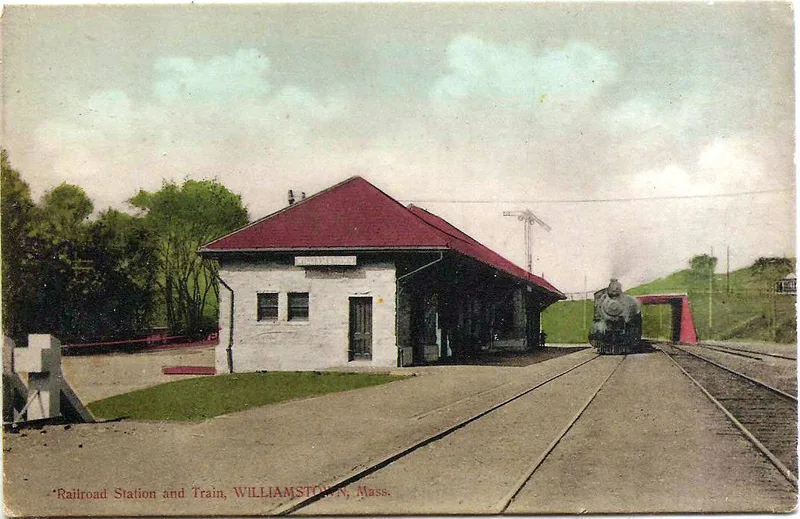
Along the Hoosic River north of Williamstown's center, a small rail yard preserves the physical record of the town's railroad era. The district includes a low stone passenger station built in 1898 after an earlier wooden depot burned, with Richardsonian Romanesque features such as rock-faced ashlar, heavy lintels, a slate roof and a sunburst gable window. Nearby are a wood-frame freight house believed to date from 1879 and two sets of concrete coal silos built between 1914 and 1931, apparently by the Gifford-Wood Company. Williamstown became a division point for the line in 1888, and the yard shaped the town's growth. Passenger service ended in 1958, and the coal elevators saw use until the 1970s. These are the only rail-related structures left in Williamstown, and the station is the only one remaining in northern Berkshire County. The district was listed for its architecture and its role in local transportation history.
Machine-generated summary. This summary was generated by a language model from the official nomination document and has not been reviewed line by line by an editor. It may contain errors. Check the source document before relying on any detail. Source: nomination document (PDF) · catalog entry. Generated October 2026 (model claude-sonnet-5-5, prompt v1.0-2026-10-29).
| Period of significance | 1898-1944 |
|---|---|
| Styles | Late Victorian: Romanesque (station); no style (other resources) |
| Areas of significance | Architecture, Transportation |
| Acreage | 4 |
| Boundary source | NPS cultural-resource GIS polygon |
| Full listing page | Williamstown Rail Yard and Station Historic District (property record) |
What listing means for this property
This is a historic district. Buildings within its boundary are either contributing (they add to the district's significance) or non-contributing. Owners of contributing income-producing buildings can claim the 20% federal rehabilitation tax credit; homeowners should look at state credits. National Register districts impose no design review by themselves; a local historic district ordinance, if one exists, does (the difference explained).
General information, not legal or tax advice. Rules change; confirm with your State Historic Preservation Office or a qualified adviser.