William Street Historic District

Why it's listed
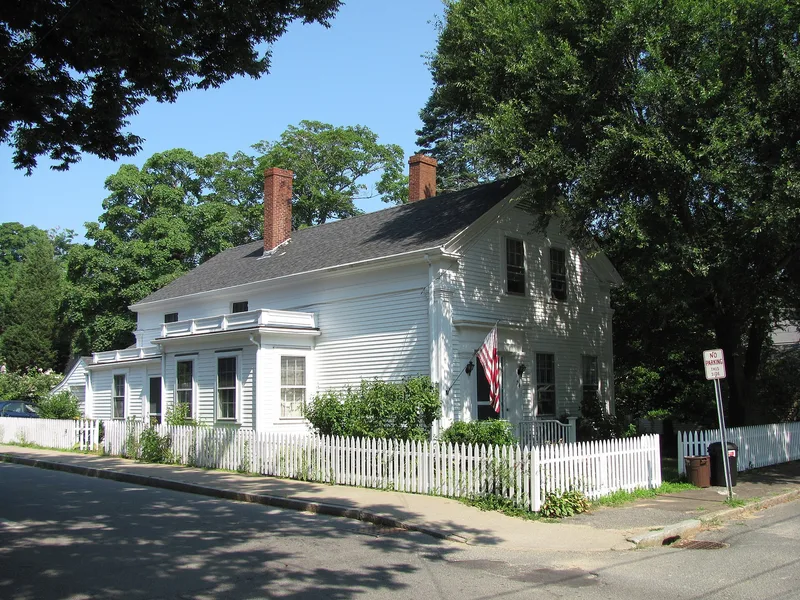
William Street Historic District is a hillside neighborhood of fifty-six properties in Tisbury, overlooking Vineyard Haven Harbor and the town center on Martha's Vineyard. Mostly residential, it also contains churches, the Town Hall, a Masonic lodge, a museum and an old burying ground. Thirty-six buildings are Greek Revival houses built between 1833 and 1858, during three planned developments that began with Thomas Bradley's Model Village. A few earlier houses, including one from 1720, and later Italianate, Queen Anne, Gothic Revival and Shingle Style buildings fit comfortably alongside them. Narrow streets, picket and cast iron fences and street trees preserve the mid nineteenth century character. The district was listed because it is the most intact group of Greek Revival buildings in Tisbury, many surviving the 1883 fire that destroyed much of the town. It also represents an early planned residential development financed by the island's maritime economy, and shows fine proportion and craftsmanship.
Machine-generated summary. This summary was generated by a language model from the official nomination document and has not been reviewed line by line by an editor. It may contain errors. Check the source document before relying on any detail. Source: nomination document (PDF) · catalog entry. Generated October 2026 (model claude-sonnet-5-5, prompt v1.0-2026-10-29).
| Period of significance | 1800-1899, 1900-1924 (specific dates 1720-1924) |
|---|---|
| Styles | Greek Revival predominantly, with Italianate, Queen Anne, Gothic Revival, Shingle Style and Romanesque Revival examples |
| Areas of significance | Community Planning and Development, Architecture |
| Acreage | 20 |
| Boundary source | NPS cultural-resource GIS polygon |
| Full listing page | William Street Historic District (property record) |
What listing means for this property
This is a historic district. Buildings within its boundary are either contributing (they add to the district's significance) or non-contributing. Owners of contributing income-producing buildings can claim the 20% federal rehabilitation tax credit; homeowners should look at state credits. National Register districts impose no design review by themselves; a local historic district ordinance, if one exists, does (the difference explained).
General information, not legal or tax advice. Rules change; confirm with your State Historic Preservation Office or a qualified adviser.