Wilder Street Historic District

Why it's listed
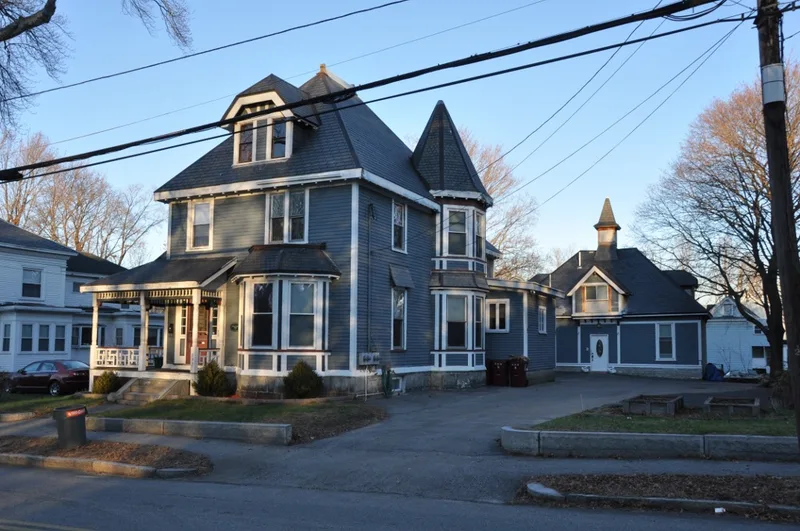
Wilder Street, in the Highlands section of Lowell, Massachusetts, forms a compact residential district of 31 buildings along about 525 feet of roadway. Nearly all date from the 1870s and 1880s, when former farmland was subdivided by provisions dealer Charles H. Wilder and sold as house lots. Large homes on spacious west-side parcels sit opposite smaller houses on narrower east-side lots, reflecting speculative development. The houses show Italianate, Second Empire, Queen Anne and Stick Style design, with one Colonial Revival house from 1893. Notable examples include the Charles W. Wilder House, the Asa C. Russell House and the William Bascom House, whose Eastlake porch is described as probably the finest of its kind in Lowell. Many properties retain matching carriage houses. Of the 31 resources, 29 contribute to the district's character, and the buildings remain in good condition with modest alterations. The district illustrates how successful businessmen and the growing middle class settled in the Highlands once streetcar lines made the area accessible.
Machine-generated summary. This summary was generated by a language model from the official nomination document and has not been reviewed line by line by an editor. It may contain errors. Check the source document before relying on any detail. Source: nomination document (PDF) · catalog entry. Generated October 2026 (model claude-sonnet-5-5, prompt v1.0-2026-10-29).
| Period of significance | 1870-1945 |
|---|---|
| Styles | Late Victorian: Italianate, Second Empire, Queen Anne, Stick Style; Late 19th & 20th Century Revivals: Colonial Revival |
| Areas of significance | Architecture, Community Planning and Development |
| Acreage | 3 |
| Boundary source | NPS cultural-resource GIS polygon |
| Full listing page | Wilder Street Historic District (property record) |
What listing means for this property
This is a historic district. Buildings within its boundary are either contributing (they add to the district's significance) or non-contributing. Owners of contributing income-producing buildings can claim the 20% federal rehabilitation tax credit; homeowners should look at state credits. National Register districts impose no design review by themselves; a local historic district ordinance, if one exists, does (the difference explained).
General information, not legal or tax advice. Rules change; confirm with your State Historic Preservation Office or a qualified adviser.