Whitney, F. A., Carriage Company Complex Historic District

Why it's listed
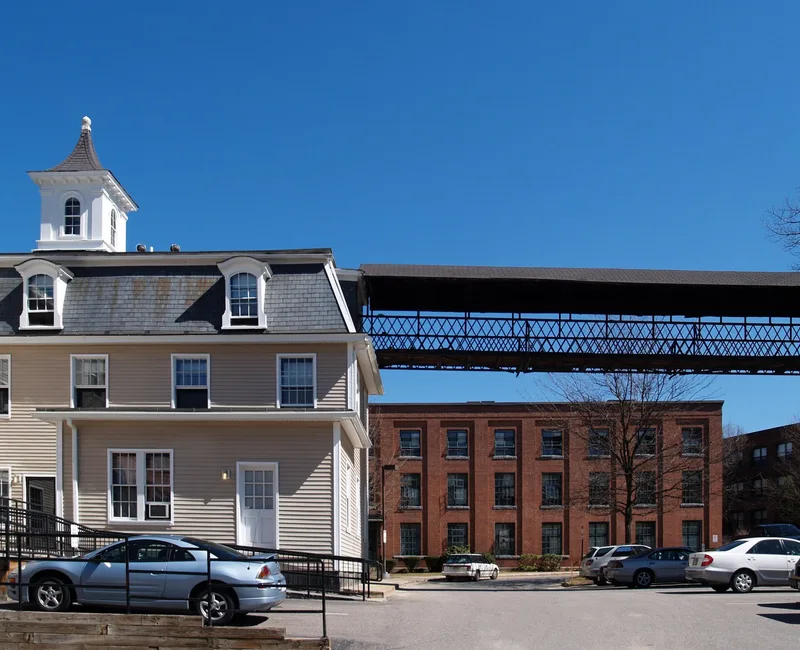
Along the Monoosnock River in Leominster, Massachusetts, a twelve-acre mill complex preserves the home of the F. A. Whitney Carriage Company. The district holds frame and brick buildings dating from 1872 to the 1920s, including a Second Empire office with a cupola, wood mills with mansard-roofed headhouses, and four-story brick mills, one with bold Romanesque Revival detailing facing Water Street. The river supplied power through a dam, a raceway and an early turbine installation. The firm began in 1858 and grew into the largest baby carriage producer in the United States, building 200,000 carriages in 1918. It also developed patented features such as a reversible handle and a fiber substitute for reeds, and later added doll carriages and juvenile furniture. The company closed in 1952. The complex is recognized for its role in local industry and as a well-kept record of changing mill design, and it is now being converted to housing.
Machine-generated summary. This summary was generated by a language model from the official nomination document and has not been reviewed line by line by an editor. It may contain errors. Check the source document before relying on any detail. Source: nomination document (PDF) · catalog entry. Generated October 2026 (model claude-sonnet-5-5, prompt v1.0-2026-10-29).
| Period of significance | 1872-1937 |
|---|---|
| Styles | Late Victorian-Second Empire; Romanesque |
| Areas of significance | Industry, Architecture |
| Acreage | 12.4 |
| Boundary source | NPS cultural-resource GIS polygon |
| Full listing page | Whitney, F. A., Carriage Company Complex Historic District (property record) |
What listing means for this property
This is a historic district. Buildings within its boundary are either contributing (they add to the district's significance) or non-contributing. Owners of contributing income-producing buildings can claim the 20% federal rehabilitation tax credit; homeowners should look at state credits. National Register districts impose no design review by themselves; a local historic district ordinance, if one exists, does (the difference explained).
General information, not legal or tax advice. Rules change; confirm with your State Historic Preservation Office or a qualified adviser.