White Place Historic District

Why it's listed
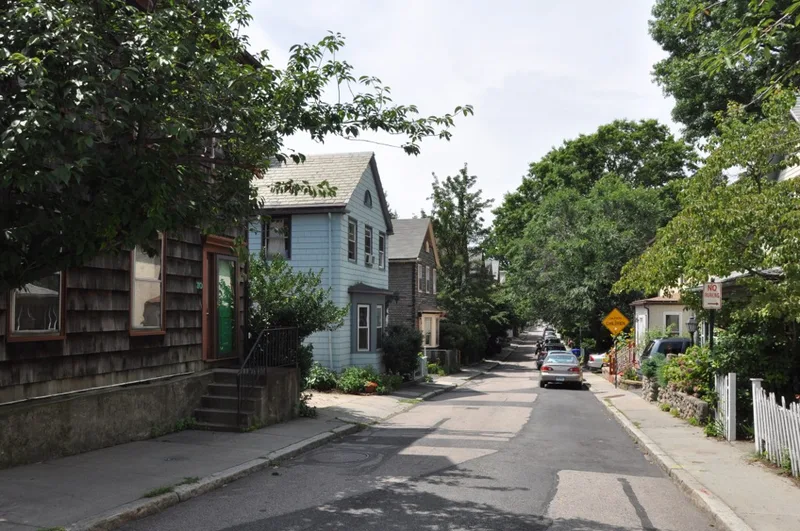
White Place is a narrow residential street in Brookline Village, Massachusetts, lined with 36 houses, barns and sheds built between about 1835 and 1905. Samuel A. Walker, a real estate auctioneer, laid out the street on former White family land in the late 1840s and 1850s. To encourage development, he moved several older houses to it, some reportedly built from timbers of the demolished Punch Bowl Tavern. Charles Follen and James Seamans also built here. Most buildings are modest Italianate-influenced cottages, later joined by triple-deckers from 1890 to 1905. Many were rental housing for laborers and journeymen. Small lots, similar building heights, and the street's isolation, with railroad tracks on one side and a steep embankment on the other, kept its appearance consistent. It did not become a through street until 1911. The district was listed for its mid-19th-century vernacular architecture and workers' housing, which grew with Brookline Village's rise as the town's commercial and civic center.
Machine-generated summary. This summary was generated by a language model from the official nomination document and has not been reviewed line by line by an editor. It may contain errors. Check the source document before relying on any detail. Source: nomination document (PDF) · catalog entry. Generated October 2026 (model claude-sonnet-5-5, prompt v1.0-2026-10-29).
| Period of significance | 1854-1890 |
|---|---|
| Styles | Italianate-derived vernacular cottages, with Picturesque, late Georgian, Greek Revival and Colonial Revival details, and triple-deckers |
| Areas of significance | Commerce, Architecture |
| Acreage | 4 |
| Boundary source | NPS cultural-resource GIS polygon |
| Full listing page | White Place Historic District (property record) |
What listing means for this property
This is a historic district. Buildings within its boundary are either contributing (they add to the district's significance) or non-contributing. Owners of contributing income-producing buildings can claim the 20% federal rehabilitation tax credit; homeowners should look at state credits. National Register districts impose no design review by themselves; a local historic district ordinance, if one exists, does (the difference explained).
General information, not legal or tax advice. Rules change; confirm with your State Historic Preservation Office or a qualified adviser.