Wheelockville District

Why it's listed
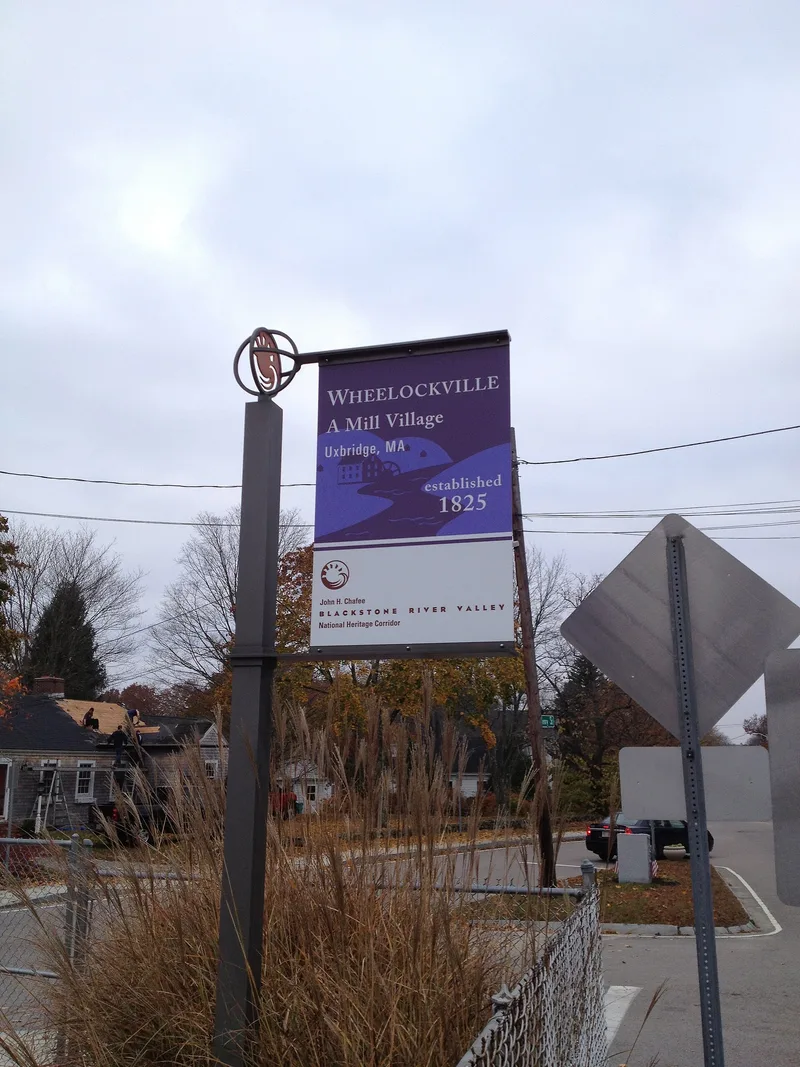
Wheelockville is a small mill village in Uxbridge, Massachusetts, laid out along Mendon and Henry Streets near the Waucantuck Mill. Its roughly 10 acres hold a well-preserved group of wood-frame cottages and houses, mostly late Federal and Greek Revival, built between about 1825 and 1885. Later Italianate and Victorian houses are scattered among them, though the village's architectural character was largely set before 1865. The area grew alongside the mill, first built by Luke Taft in 1825 and later run by the Wheelock family. The Wheelock brothers built their own houses on a ridge overlooking the mill and may have owned worker housing nearby. In the 1840s and 1850s the village also had two boot factories, one run by Joshua Garside and one by Joseph Keith, both closed by 1870. The district was recognized for keeping the scale and appearance of Uxbridge's early and mid-nineteenth-century mill villages, and for its link to the Waucantuck Mill.
Machine-generated summary. This summary was generated by a language model from the official nomination document and has not been reviewed line by line by an editor. It may contain errors. Check the source document before relying on any detail. Source: nomination document (PDF) · catalog entry. Generated October 2026 (model claude-sonnet-5-5, prompt v1.0-2026-10-29).
| Period of significance | ca. 1825-ca. 1885 |
|---|---|
| Styles | Late Federal and Greek Revival, with some Italianate and other Victorian examples |
| Areas of significance | Industry, Architecture |
| Acreage | 10 |
| Boundary source | NPS cultural-resource GIS polygon |
| Full listing page | Wheelockville District (property record) |
What listing means for this property
This is a historic district. Buildings within its boundary are either contributing (they add to the district's significance) or non-contributing. Owners of contributing income-producing buildings can claim the 20% federal rehabilitation tax credit; homeowners should look at state credits. National Register districts impose no design review by themselves; a local historic district ordinance, if one exists, does (the difference explained).
General information, not legal or tax advice. Rules change; confirm with your State Historic Preservation Office or a qualified adviser.