Wheeler Family Farmstead

The National Park Service has not published a boundary polygon for this district; the map shows the listed properties inside it and the district's reference point.
Why it's listed
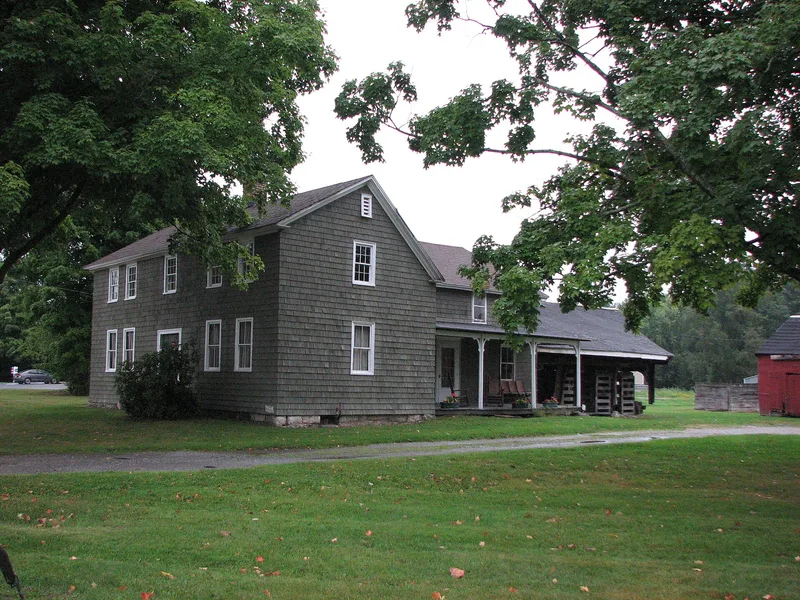
Wheeler Family Farmstead occupies 1.5 acres on the southern edge of Great Barrington, Massachusetts, along U.S. Route 7. Once part of a 130-acre farm, it now holds a wood-frame house and seven farm buildings and structures, including a workshop, hay barn, cow house, heifer house, silo, animal shed and carriage house. The house grew in stages from a small Dutch-style post-and-beam room, possibly built around 1733, to a two-room center-chimney plan added between 1764 and 1771, and was later raised to two stories and extended with a rear ell. Its mix of Dutch and English framing reflects cultural exchange along the disputed New York-Massachusetts border. Truman Wheeler, a merchant who arrived from Connecticut in 1764, bought the property in 1771, and five generations of his family farmed here. The farmland was sold for commercial development, and the historic buildings passed to the Great Barrington Historical Society in 2007, which operates them as a museum.
Machine-generated summary. This summary was generated by a language model from the official nomination document and has not been reviewed line by line by an editor. It may contain errors. Check the source document before relying on any detail. Source: nomination document (PDF) · catalog entry. Generated October 2026 (model claude-sonnet-5-5, prompt v1.0-2026-10-29).
| Styles | Colonial: Dutch Colonial and Postmedieval English |
|---|---|
| Areas of significance | Architecture, Exploration/Settlement, Agriculture, Military |
| Acreage | 1.5 |
| Boundary source | not published |
| Full listing page | Wheeler Family Farmstead (property record) |
What listing means for this property
This is a historic district. Buildings within its boundary are either contributing (they add to the district's significance) or non-contributing. Owners of contributing income-producing buildings can claim the 20% federal rehabilitation tax credit; homeowners should look at state credits. National Register districts impose no design review by themselves; a local historic district ordinance, if one exists, does (the difference explained).
General information, not legal or tax advice. Rules change; confirm with your State Historic Preservation Office or a qualified adviser.