Whately Center Historic District

Why it's listed
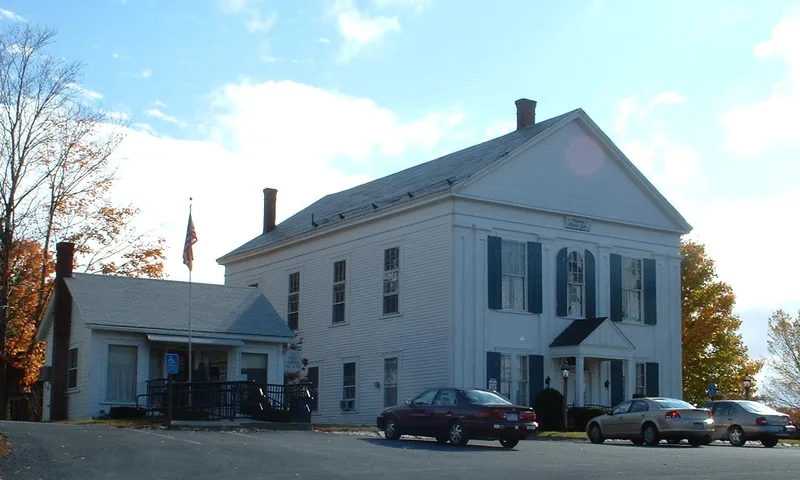
Whately Center is a linear village strung along Chestnut Plain Road and a section of Haydenville Road, on a ridge above the Mill River Valley in Franklin County, Massachusetts. Widely spaced buildings sit far back from the road behind common land, with fields behind many houses, giving the village an open, pastoral character. Federal-period houses dominate, typically two and a half stories with side-gabled roofs, central brick chimneys and five-by-two-bay plans, though later Greek Revival, Italianate and Colonial Revival changes appear. Colonial-era survivors include the wide road layout, the cemetery begun around 1771 with slate stones carved with cherubs, the 1771 town pound, and possibly an early section of the Morton House. The district also contains town institutions, churches, farm outbuildings and tobacco barns. It is significant as a well-preserved rural town center that reflects farming, trade and civic life from the Georgian period through the twentieth century, with 80 contributing resources.
Machine-generated summary. This summary was generated by a language model from the official nomination document and has not been reviewed line by line by an editor. It may contain errors. Check the source document before relying on any detail. Source: nomination document (PDF) · catalog entry. Generated October 2026 (model claude-sonnet-5-5, prompt v1.0-2026-10-29).
| Styles | Georgian, Federal, Greek Revival, Gothic Revival, Italian Villa, Queen Anne, Colonial Revival, Bungalow/Craftsman |
|---|---|
| Areas of significance | Agriculture, Architecture |
| Acreage | 201 |
| Boundary source | NPS cultural-resource GIS polygon |
| Full listing page | Whately Center Historic District (property record) |
What listing means for this property
This is a historic district. Buildings within its boundary are either contributing (they add to the district's significance) or non-contributing. Owners of contributing income-producing buildings can claim the 20% federal rehabilitation tax credit; homeowners should look at state credits. National Register districts impose no design review by themselves; a local historic district ordinance, if one exists, does (the difference explained).
General information, not legal or tax advice. Rules change; confirm with your State Historic Preservation Office or a qualified adviser.