Weymouth Meeting House Historic District

Why it's listed
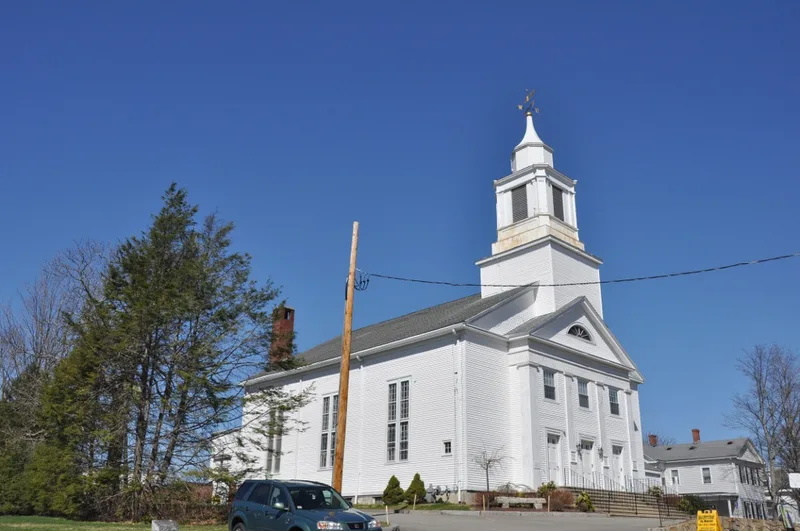
Weymouth Meeting House Historic District is a hilly residential neighborhood of about 31 acres where the town's first meetinghouse stood. Over almost four centuries it has centered on the First Church in Weymouth, two church parsonages, Weymouth Common, and Old North Cemetery. The cemetery holds roughly 9,000 burials, with a first recorded burial in 1636 and slate stones carved with winged skulls from the late 1600s. It also holds the graves of Abigail Adams's parents, a granite Civil War Soldiers' Monument dedicated in 1868, and many bank tombs. The John Adams School, built about 1854, is the oldest surviving school in Weymouth. Houses range from Cape Cod vernacular and Federal to Greek Revival, Italianate, Second Empire and Colonial Revival. The area served as the religious and political center of Weymouth until 1723, and of northern Weymouth for roughly another century. Because it never became an industrial or commercial center, it retains much of its early character despite the 1849 railroad cut through the valley.
Machine-generated summary. This summary was generated by a language model from the official nomination document and has not been reviewed line by line by an editor. It may contain errors. Check the source document before relying on any detail. Source: nomination document (PDF) · catalog entry. Generated October 2026 (model claude-sonnet-5-5, prompt v1.0-2026-10-29).
| Styles | Federal, Greek Revival, Gothic Revival, Italianate, Second Empire, Colonial Revival |
|---|---|
| Areas of significance | Architecture, Community Planning and Development |
| Acreage | 31 |
| Boundary source | NPS cultural-resource GIS polygon |
| Full listing page | Weymouth Meeting House Historic District (property record) |
What listing means for this property
This is a historic district. Buildings within its boundary are either contributing (they add to the district's significance) or non-contributing. Owners of contributing income-producing buildings can claim the 20% federal rehabilitation tax credit; homeowners should look at state credits. National Register districts impose no design review by themselves; a local historic district ordinance, if one exists, does (the difference explained).
General information, not legal or tax advice. Rules change; confirm with your State Historic Preservation Office or a qualified adviser.