Weymouth Civic District

Why it's listed
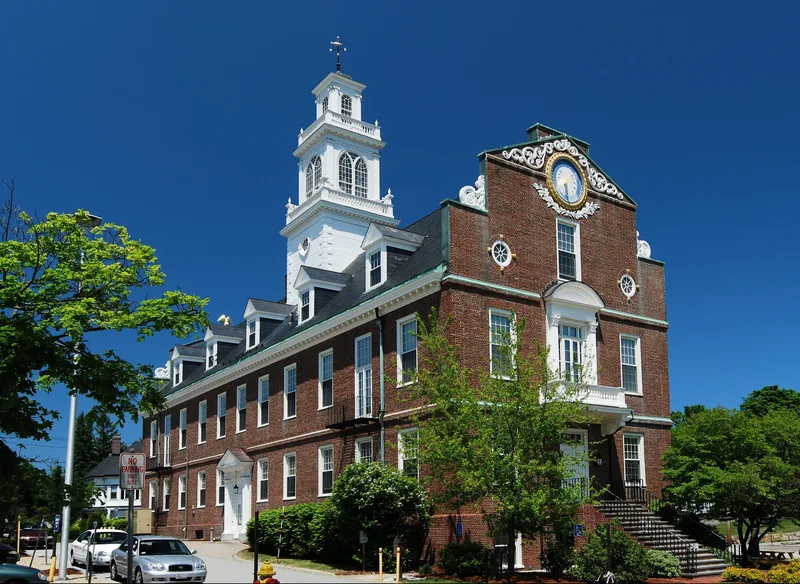
Near the center of Weymouth, a four-acre group of municipal buildings and monuments grew up beside the town's high school in the late 1920s. After the old town hall burned in 1914, offices were rented and meetings held in opera houses. In 1927 the town voted $175,000 for new offices and a veterans' memorial, and a committee chose the high school grounds from fifteen possible sites. Boston architects McLaughlin & Burr designed the brick Colonial Revival Town Hall, modeled on Boston's Old State House at one-fifth larger scale. It was dedicated in 1929. The Tudor Revival Industrial School of 1926, planned with architect Howard B. S. Prescott and partly built by high school carpentry students, housed vocational training. A brick Memorial Wall fronting a grassed open air theater and a granite Memorial Cross complete the group. The complex is valued locally for its civic planning, architecture and surviving original character.
Machine-generated summary. This summary was generated by a language model from the official nomination document and has not been reviewed line by line by an editor. It may contain errors. Check the source document before relying on any detail. Source: nomination document (PDF) · catalog entry. Generated October 2026 (model claude-sonnet-5-5, prompt v1.0-2026-10-29).
| Period of significance | 1925-1940 |
|---|---|
| Styles | Late 19th and 20th Century Revival/Colonial Revival, Tudor Revival |
| Areas of significance | Community Planning and Development, Education, Politics/Government, Architecture |
| Acreage | 4 |
| Boundary source | NPS cultural-resource GIS polygon |
| Full listing page | Weymouth Civic District (property record) |
What listing means for this property
This is a historic district. Buildings within its boundary are either contributing (they add to the district's significance) or non-contributing. Owners of contributing income-producing buildings can claim the 20% federal rehabilitation tax credit; homeowners should look at state credits. National Register districts impose no design review by themselves; a local historic district ordinance, if one exists, does (the difference explained).
General information, not legal or tax advice. Rules change; confirm with your State Historic Preservation Office or a qualified adviser.