Westborough State Hospital

Why it's listed
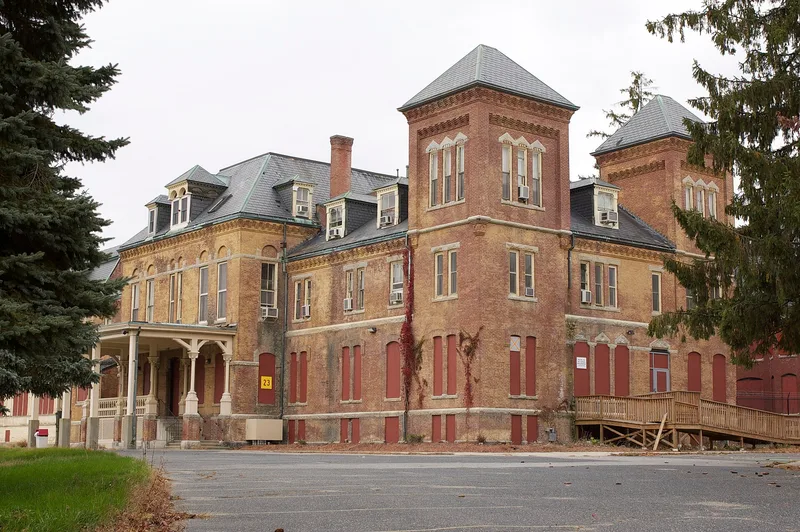
Westborough State Hospital is a 650-acre campus of hospital buildings, staff cottages, farm structures and pastureland on a hilltop above Lake Chauncy, spanning Westborough and Northborough. Its main building grew from the 1848 Lyman School for Boys, designed by Elias Carter and James Savage, which was remodeled by George Clough after the state converted the site to a hospital in 1884. That work added the state's first congregate dining room, meant to give patients a hotel-like sense of normalcy. Nearby stand Colonial Revival wards such as Talbot House, designed by Rand, Taylor, Kendall and Stevens, and Queen Anne and utilitarian buildings by other architects. The hospital was the second homeopathic state hospital in the nation, emphasizing rest, massage, hydrotherapy and diet, and it trained nurses and medical students. Fields, pastures and lawns remain close to their early twentieth-century pattern, showing how farm work formed part of patient treatment. The campus retains substantial integrity from 1845 to 1940.
Machine-generated summary. This summary was generated by a language model from the official nomination document and has not been reviewed line by line by an editor. It may contain errors. Check the source document before relying on any detail. Source: nomination document (PDF) · catalog entry. Generated October 2026 (model claude-sonnet-5-5, prompt v1.0-2026-10-29).
| Period of significance | 1845 to 1940 |
|---|---|
| Styles | Mid 19th: Greek & Renaissance Revivals; Late 19th & 20th Revivals: Colonial Revival; Late 19th & 20th American: Craftsman; Other: Utilitarian |
| Areas of significance | Health/Medicine, Architecture, Social History |
| Acreage | 650 |
| Boundary source | NPS cultural-resource GIS polygon |
| Full listing page | Westborough State Hospital (property record) |
What listing means for this property
This is a historic district. Buildings within its boundary are either contributing (they add to the district's significance) or non-contributing. Owners of contributing income-producing buildings can claim the 20% federal rehabilitation tax credit; homeowners should look at state credits. National Register districts impose no design review by themselves; a local historic district ordinance, if one exists, does (the difference explained).
General information, not legal or tax advice. Rules change; confirm with your State Historic Preservation Office or a qualified adviser.