West Sutton Historic District

Why it's listed
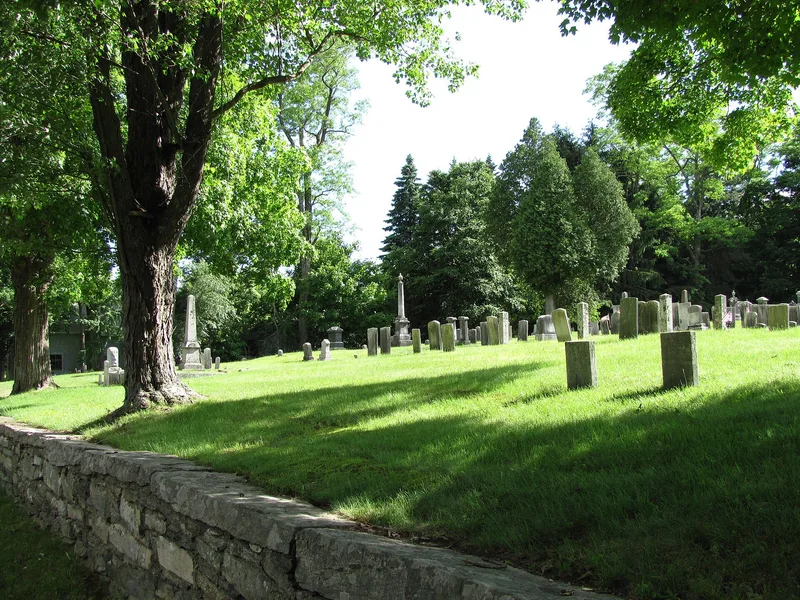
West Sutton Historic District covers roughly 460 acres in the southwest corner of Sutton, Massachusetts, near the Oxford town line. At its center is a linear village strung along Central Turnpike, with farms and open farmland extending north and south. Most buildings date from the late 18th to late 19th century and are mainly wood-framed houses, barns and outbuildings, along with a church, a former school, a cemetery and one brick dwelling. Notable examples include the Georgian Samuel Waters Tavern, with a hand-painted ballroom, and the Federal Bastow-Phelps House. Dams, ponds and stone-lined waterways recall the water-powered sawmills and grist mills that once operated here. Taverns served travelers on the turnpikes, including stagecoach traffic between Boston and Hartford. The district matters because it preserves a 19th-century rural community, including village buildings, working farms and sweeping views between hilltop farmsteads that have disappeared elsewhere in Sutton.
Machine-generated summary. This summary was generated by a language model from the official nomination document and has not been reviewed line by line by an editor. It may contain errors. Check the source document before relying on any detail. Source: nomination document (PDF) · catalog entry. Generated October 2026 (model claude-sonnet-5-5, prompt v1.0-2026-10-29).
| Styles | Georgian, Federal, Neo-Classical, Greek Revival, Late Greek Revival, Vernacular, and Arts and Crafts (Bungalow/Craftsman) |
|---|---|
| Areas of significance | Architecture, Agriculture, Community Planning and Development, Industry |
| Acreage | 460 |
| Boundary source | NPS cultural-resource GIS polygon |
| Full listing page | West Sutton Historic District (property record) |
What listing means for this property
This is a historic district. Buildings within its boundary are either contributing (they add to the district's significance) or non-contributing. Owners of contributing income-producing buildings can claim the 20% federal rehabilitation tax credit; homeowners should look at state credits. National Register districts impose no design review by themselves; a local historic district ordinance, if one exists, does (the difference explained).
General information, not legal or tax advice. Rules change; confirm with your State Historic Preservation Office or a qualified adviser.