West Granville Historic District

Why it's listed
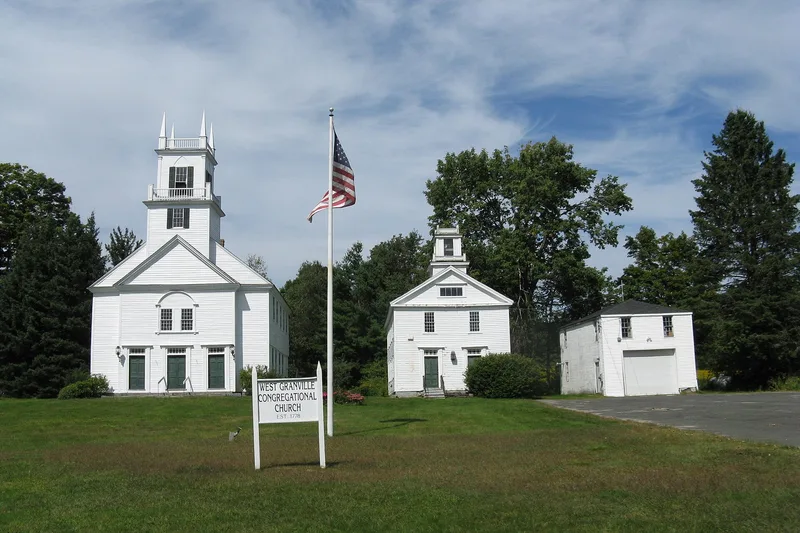
West Granville is a small crossroads village in the hills of southwestern Massachusetts, set apart from Granville's other settlements by the Great Valley to the east and a notch in the Berkshire Hills to the west. Its houses, mostly wood-frame with center chimneys, stone foundations and clapboard siding, line Main Road beneath maples about 150 years old. Georgian farmhouses from the 1760s, including the Baldwin, Coe and Lloyd houses, are the oldest buildings in the town. Federal houses followed, among them the 1790 brick John Phelps House, the only brick Federal dwelling in Granville's three villages. The Second Church of Christ Congregational, built in 1778 and later given Greek Revival additions, anchors the village green. Its first preacher, Lemuel Haynes, became a notable Black figure in American history. Building slowed after 1830 as the town's population moved east toward industry. The district's boundaries follow natural land formations, and few modern intrusions affect its historic character.
Machine-generated summary. This summary was generated by a language model from the official nomination document and has not been reviewed line by line by an editor. It may contain errors. Check the source document before relying on any detail. Source: nomination document (PDF) · catalog entry. Generated October 2026 (model claude-sonnet-5-5, prompt v1.0-2026-10-29).
| Styles | Colonial/Georgian; Early Republic/Federal; Mid-19th Century/Greek Revival; Late 19th Century Revival/Colonial Revival; Bungalow; No Style |
|---|---|
| Areas of significance | Community Planning and Development, Agriculture, Architecture |
| Acreage | 49 |
| Boundary source | NPS cultural-resource GIS polygon |
| Full listing page | West Granville Historic District (property record) |
What listing means for this property
This is a historic district. Buildings within its boundary are either contributing (they add to the district's significance) or non-contributing. Owners of contributing income-producing buildings can claim the 20% federal rehabilitation tax credit; homeowners should look at state credits. National Register districts impose no design review by themselves; a local historic district ordinance, if one exists, does (the difference explained).
General information, not legal or tax advice. Rules change; confirm with your State Historic Preservation Office or a qualified adviser.