West Chop Club Historic District

Why it's listed
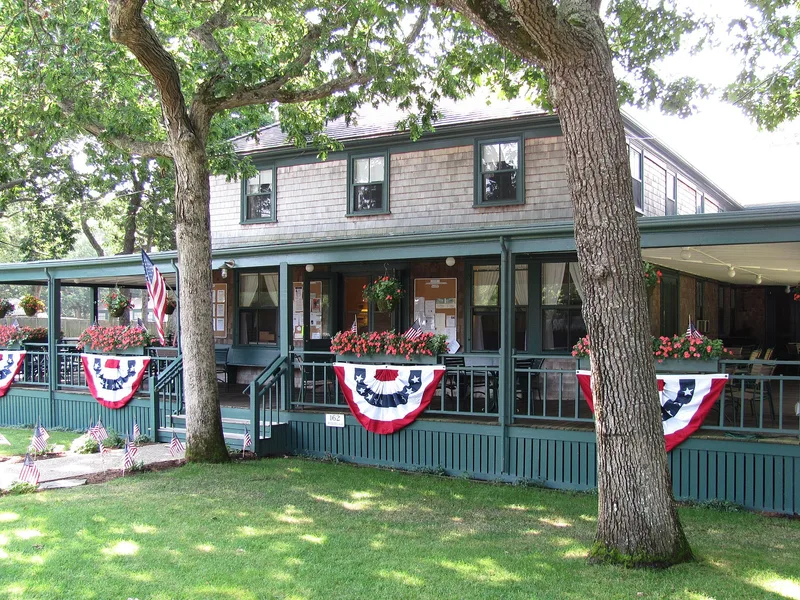
West Chop Club Historic District occupies about 17 acres at the northern tip of West Chop, a peninsula in Tisbury on Martha's Vineyard. It centers on Iroquois Avenue and includes part of a 2,000-foot beachfront along Vineyard Sound. Five contributing buildings and four contributing structures, including a historic pier, a jetty and two tennis courts, survive from the community laid out by the West Chop Land Company. The Cedars, a hotel and clubhouse, and The Casino, with its bowling alley, billiard room and upstairs dance hall, date to 1889. The West Chop Inn followed in 1892. Built in the Shingle Style with white cedar shingle walls, they were designed to look harmonious, and the company reviewed designs and set building restrictions on lots. Early summer residents came largely from Massachusetts, Rhode Island and Connecticut. The West Chop Trust bought the main buildings in 1911, and a private club has operated the grounds since the 1960s.
Machine-generated summary. This summary was generated by a language model from the official nomination document and has not been reviewed line by line by an editor. It may contain errors. Check the source document before relying on any detail. Source: nomination document (PDF) · catalog entry. Generated October 2026 (model claude-sonnet-5-5, prompt v1.0-2026-10-29).
| Styles | Late Victorian: Shingle style; Late 19th-Early 20th Century Revivals: Tudor Revival, Colonial Revival |
|---|---|
| Areas of significance | Architecture, Community Planning and Development, Entertainment/Recreation |
| Acreage | 17 |
| Boundary source | NPS cultural-resource GIS polygon |
| Full listing page | West Chop Club Historic District (property record) |
What listing means for this property
This is a historic district. Buildings within its boundary are either contributing (they add to the district's significance) or non-contributing. Owners of contributing income-producing buildings can claim the 20% federal rehabilitation tax credit; homeowners should look at state credits. National Register districts impose no design review by themselves; a local historic district ordinance, if one exists, does (the difference explained).
General information, not legal or tax advice. Rules change; confirm with your State Historic Preservation Office or a qualified adviser.