West Brookfield Center Historic District (Boundary Increase)

Why it's listed
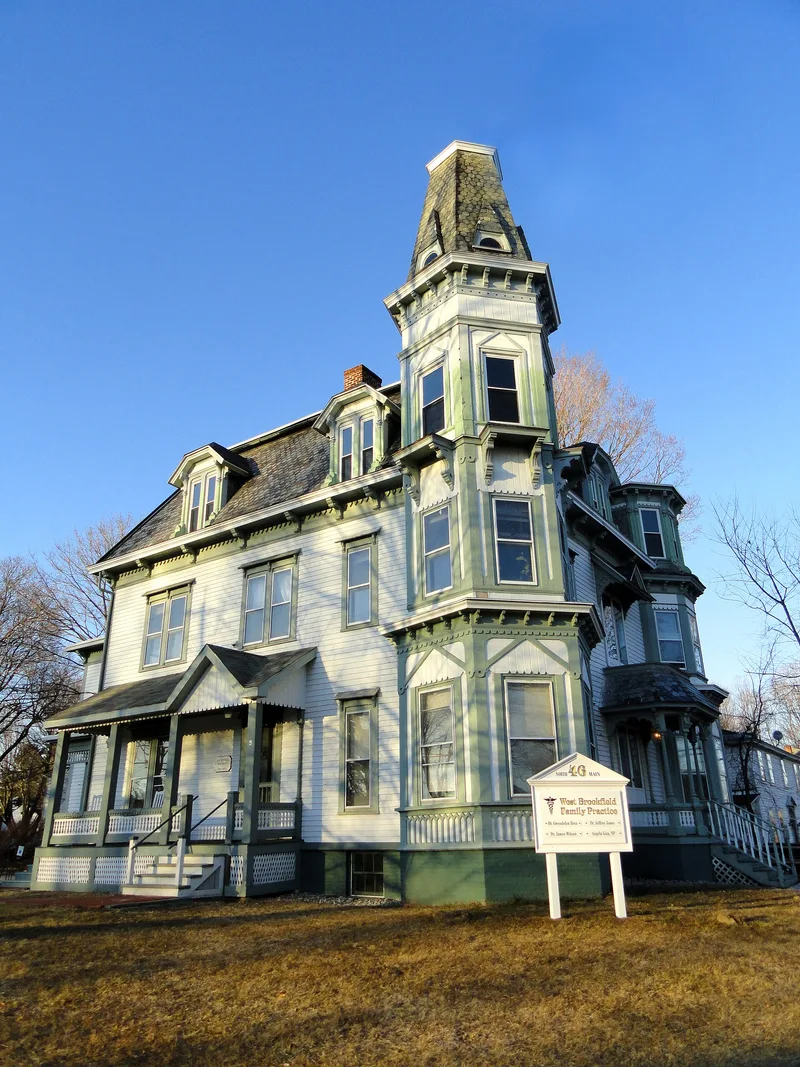
This addition to the West Brookfield Center Historic District covers the area just south of the town center, between Lake Wickaboag, Coy's Brook and the Quaboag River. It grew after the Western Railroad arrived in 1839 and as local industry expanded in the second half of the 19th century. Railroad buildings anchor the area: an 1847 Gothic Revival passenger depot moved to Ware Street in 1884, an 1847 brick freight house still on its original site, an 1884 Richardsonian Romanesque depot of granite and brownstone designed by E. C. Gardner, and a 1955 steel overpass bridge reused from another location. Small factories and shops clustered near the tracks, and the history of the area includes boot, heel and corset manufacturing. Most buildings, however, are modest mid-to-late 19th century houses on tree-lined streets, built for middle- and working-class families. The district includes 58 contributing and 25 noncontributing resources, and its character reflects the town's railroad-era growth.
Machine-generated summary. This summary was generated by a language model from the official nomination document and has not been reviewed line by line by an editor. It may contain errors. Check the source document before relying on any detail. Source: nomination document (PDF) · catalog entry. Generated October 2026 (model claude-sonnet-5-5, prompt v1.0-2026-10-29).
| Styles | Federal, Greek Revival, Gothic Revival, Italianate, Richardsonian Romanesque, and mid-20th century ranch, Cape Cod and astylistic |
|---|---|
| Areas of significance | Architecture, Commerce, Community Planning and Development, Industry, Transportation |
| Acreage | 36 |
| Boundary source | NPS cultural-resource GIS polygon |
| Full listing page | West Brookfield Center Historic District (Boundary Increase) (property record) |
What listing means for this property
This is a historic district. Buildings within its boundary are either contributing (they add to the district's significance) or non-contributing. Owners of contributing income-producing buildings can claim the 20% federal rehabilitation tax credit; homeowners should look at state credits. National Register districts impose no design review by themselves; a local historic district ordinance, if one exists, does (the difference explained).
General information, not legal or tax advice. Rules change; confirm with your State Historic Preservation Office or a qualified adviser.