Wayland Center Historic District

Why it's listed
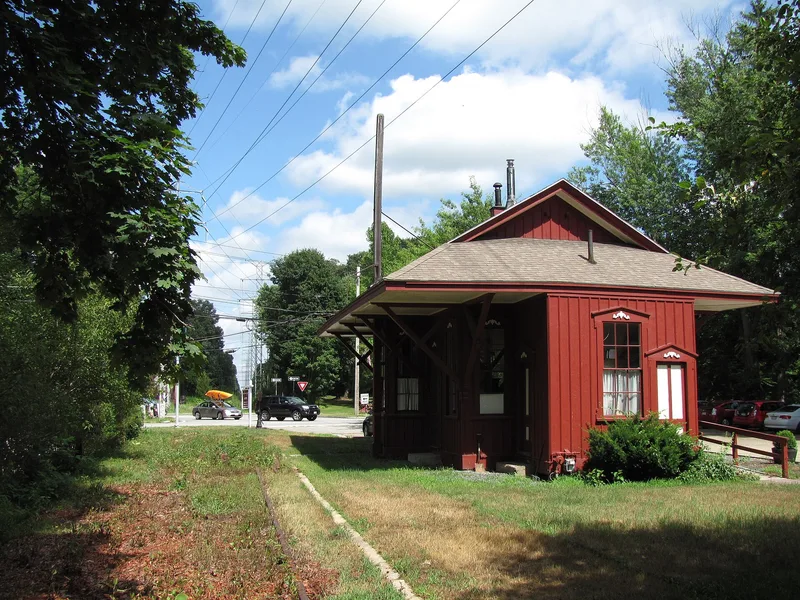
Wayland Center is a 26-acre village district where Cochituate Road meets the Boston Post Road in Wayland, Massachusetts. It contains 16 structures, most set back from the road on wooded lawns. The First Parish Unitarian Church, raised in 1814 and finished in 1815 from an Asher Benjamin design, is the visual focal point, with a clock tower, belfry and cupola. Nearby are carriage sheds, Kirkside, Federal-style houses, the Greek Revival Collins Market of 1841, a Colonial Revival post office, Judge Mellen's 1826 law office, and a Stick Style railroad station of 1881. The newest building is the 1957 Town Building. The district was listed because it preserves an authentic rural village center of 19th-century Massachusetts despite heavy traffic and suburban growth. Its buildings record the town's religious life, early public library, municipal buildings, commerce and the arrival of the railroad, which made Wayland a commuter suburb of Boston.
Machine-generated summary. This summary was generated by a language model from the official nomination document and has not been reviewed line by line by an editor. It may contain errors. Check the source document before relying on any detail. Source: nomination document (PDF) · catalog entry. Generated October 2026 (model claude-sonnet-5-5, prompt v1.0-2026-10-29).
| Period of significance | 19th Century (specific date 1815) |
|---|---|
| Styles | Federal, Greek Revival, Stick Style and Colonial Revival buildings |
| Areas of significance | Commerce, Education, Architecture, Religion |
| Acreage | 21 |
| Boundary source | NPS cultural-resource GIS polygon |
| Full listing page | Wayland Center Historic District (property record) |
What listing means for this property
This is a historic district. Buildings within its boundary are either contributing (they add to the district's significance) or non-contributing. Owners of contributing income-producing buildings can claim the 20% federal rehabilitation tax credit; homeowners should look at state credits. National Register districts impose no design review by themselves; a local historic district ordinance, if one exists, does (the difference explained).
General information, not legal or tax advice. Rules change; confirm with your State Historic Preservation Office or a qualified adviser.