Watertown Arsenal Historic District

Why it's listed
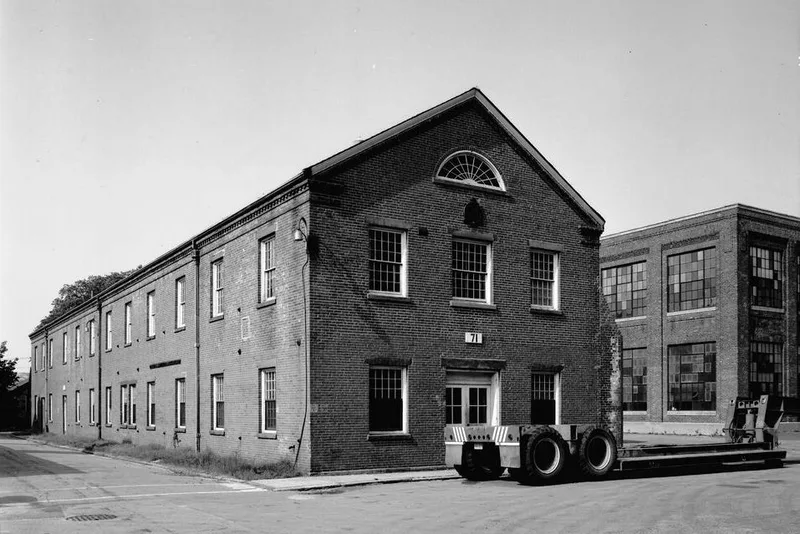
Occupying 45 acres along Arsenal Street in Watertown, this district is the surviving core of the Watertown Arsenal, an Army ordnance depot founded in 1816 and later home to the Army Materials Technology Laboratory. Its red brick buildings, with spare classically inspired designs from different periods, include 15 contributing buildings, three structures, a site and an object. A cluster of four long gable-roofed buildings formed the gun carriage manufacturing complex, dating from 1851 to 1894. Research laboratories occupy the western part, including a converted 1922 piano factory. Near the entrance drive, the Italianate Commanding Officer's Quarters and the Colonial Revival Administration Building sit within a landscape designed by the Olmsted firm. The district is surrounded by brick posts and wrought iron fencing. Land to the east, once part of the arsenal, was turned over to the town in 1968 and is outside the district. Contributing resources relate to the Arsenal's activities between 1816 and 1947, which marks its period of significance.
Machine-generated summary. This summary was generated by a language model from the official nomination document and has not been reviewed line by line by an editor. It may contain errors. Check the source document before relying on any detail. Source: nomination document (PDF) · catalog entry. Generated October 2026 (model claude-sonnet-5-5, prompt v1.0-2026-10-29).
| Period of significance | 1816-1947 |
|---|---|
| Styles | Mid 19th Century; Late Victorian; Early 20th Century Industrial, No Style |
| Areas of significance | Architecture, Engineering, Industry, Invention, Landscape Architecture, Military |
| Acreage | 45 |
| Boundary source | NPS cultural-resource GIS polygon |
| Full listing page | Watertown Arsenal Historic District (property record) |
What listing means for this property
This is a historic district. Buildings within its boundary are either contributing (they add to the district's significance) or non-contributing. Owners of contributing income-producing buildings can claim the 20% federal rehabilitation tax credit; homeowners should look at state credits. National Register districts impose no design review by themselves; a local historic district ordinance, if one exists, does (the difference explained).
General information, not legal or tax advice. Rules change; confirm with your State Historic Preservation Office or a qualified adviser.