Washburn Square-Leicester Common Historic District (Additional Documentation)

Why it's listed
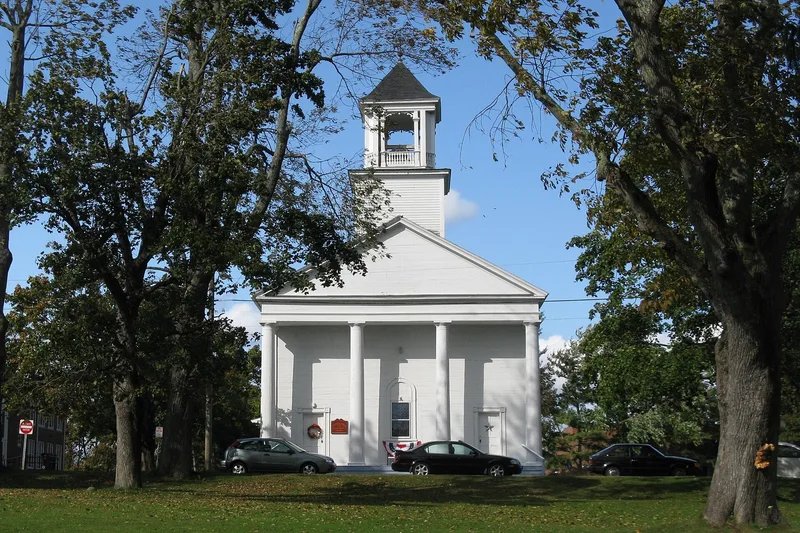
Leicester's town common and the streets around it form a compact historic district on high ground once called Strawberry Hill. The 2.3-acre common is bordered by Washburn Square, Main Street and Paxton Street. Along the north side stand the First Congregational Church, the Town Hall and the Unitarian Church, while stately houses face the common from the south side of Main Street. The oldest buildings date to the late 1700s, including the 1789 Darius Cutting House and the 1791 Col. Thomas Denny, Jr. House. Brick Federal buildings such as the 1813 David McFarland House and the 1809 Daniel McFarland Store show the wealth of early residents. The present arrangement of the common and its institutions came from an intentional town-planning effort between about 1826 and 1831. Because Route 9 bypassed this stretch of Main Street in 1931, the area keeps a quiet, mid-19th century appearance. Several buildings now serve Becker College, and newer college buildings are excluded or counted as noncontributing.
Machine-generated summary. This summary was generated by a language model from the official nomination document and has not been reviewed line by line by an editor. It may contain errors. Check the source document before relying on any detail. Source: nomination document (PDF) · catalog entry. Generated October 2026 (model claude-sonnet-5-5, prompt v1.0-2026-10-29).
| Styles | Georgian, Federal, Greek Revival, Italianate, Second Empire, Queen Anne, Colonial Revival, Tudor Revival |
|---|---|
| Areas of significance | Architecture, Community Planning and Development, Education |
| Acreage | 21 |
| Boundary source | NPS cultural-resource GIS polygon |
| Full listing page | Washburn Square-Leicester Common Historic District (Additional Documentation) (property record) |
What listing means for this property
This is a historic district. Buildings within its boundary are either contributing (they add to the district's significance) or non-contributing. Owners of contributing income-producing buildings can claim the 20% federal rehabilitation tax credit; homeowners should look at state credits. National Register districts impose no design review by themselves; a local historic district ordinance, if one exists, does (the difference explained).
General information, not legal or tax advice. Rules change; confirm with your State Historic Preservation Office or a qualified adviser.