Ware Millyard Historic District

Why it's listed
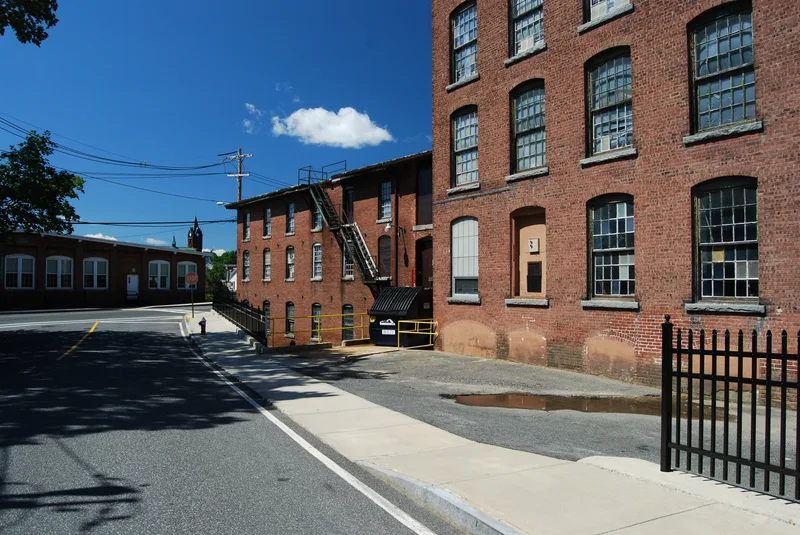
Along both banks of the Ware River in Ware, Massachusetts, a cluster of brick and granite mills forms the core of a historic industrial district. Its buildings date from about 1825 to 1939, with most built in the second half of the 19th century. The oldest is the Ware Manufacturing Company store and counting room, the only documented survivor of the earliest factory village. Otis Company Mill #1, a granite structure from about 1845 attributed to builder Nathaniel Dudley Goodell, is the oldest mill in town and its only large stone industrial building. Other structures include a repair shop, boiler house, powerhouse, dye house and finishing buildings. The district also takes in company housing on streets such as Canal Street, community institutions, Nenameseck Park with its cast iron fence and fountain, and the upper dam that controlled water power. The mills are valued less for stylistic flourish than for their surviving original materials, including brick walls, multi-light wooden sash and stone details, and for the engineering of the river dams.
Machine-generated summary. This summary was generated by a language model from the official nomination document and has not been reviewed line by line by an editor. It may contain errors. Check the source document before relying on any detail. Source: nomination document (PDF) · catalog entry. Generated October 2026 (model claude-sonnet-5-5, prompt v1.0-2026-10-29).
| Styles | Mostly vernacular industrial brick masonry with modest late Georgian and bracketed details; nearby housing in Greek Revival, Second Empire, High Victorian Gothic, Shingle, Queen Anne and Colonial Revival styles |
|---|---|
| Areas of significance | Industry, Community Planning and Development, Architecture, Social History |
| Acreage | 42 |
| Boundary source | NPS cultural-resource GIS polygon |
| Full listing page | Ware Millyard Historic District (property record) |
What listing means for this property
This is a historic district. Buildings within its boundary are either contributing (they add to the district's significance) or non-contributing. Owners of contributing income-producing buildings can claim the 20% federal rehabilitation tax credit; homeowners should look at state credits. National Register districts impose no design review by themselves; a local historic district ordinance, if one exists, does (the difference explained).
General information, not legal or tax advice. Rules change; confirm with your State Historic Preservation Office or a qualified adviser.