Wamesit Canal-Whipple Mill Industrial Complex

Why it's listed
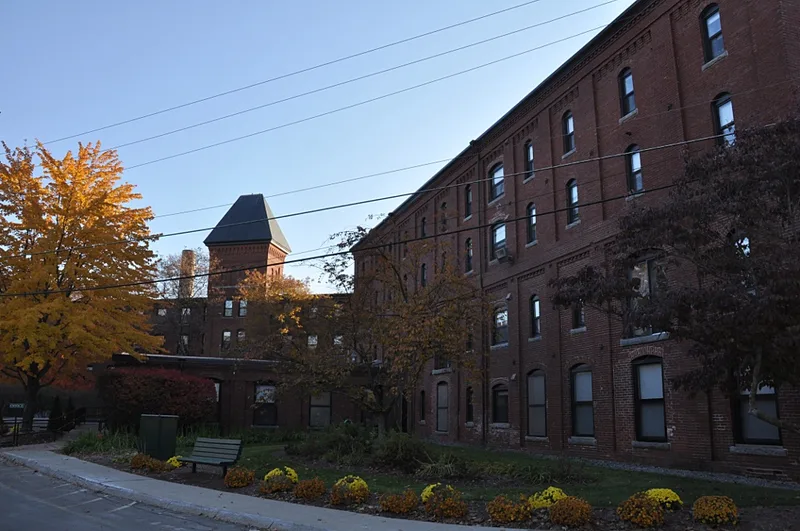
Along the Concord River in southeastern Lowell, this four-acre complex combines a hand-dug waterpower canal with a cluster of mill buildings on an island. Oliver M. Whipple built the Wamesit Canal in 1821-22, consulting engineer Loammi Baldwin, to power his gunpowder works and other small mills. His rubble stone powder mill, built about 1821, is the city's oldest industrial structure; its powder was exported abroad and supplied to American troops in the Mexican War. The island was created when the canal was extended to River Meadow Brook in 1846. Later the Stirling Woolen Mill rose here, with a brick main building of 1880, enlarged in 1896, a carbonizing house of 1907, a storehouse, a powerhouse, and a wooden truss bridge of about 1880. The complex is notable for contrasting with the heavily financed corporate canal system run by the Merrimack River companies, and for offering a separate, comparable waterpower technology.
Machine-generated summary. This summary was generated by a language model from the official nomination document and has not been reviewed line by line by an editor. It may contain errors. Check the source document before relying on any detail. Source: nomination document (PDF) · catalog entry. Generated October 2026 (model claude-sonnet-5-5, prompt v1.0-2026-10-29).
| Areas of significance | Industry, Commerce, Engineering, Architecture |
|---|---|
| Acreage | 4 |
| Boundary source | NPS cultural-resource GIS polygon |
| Full listing page | Wamesit Canal-Whipple Mill Industrial Complex (property record) |
What listing means for this property
This is a historic district. Buildings within its boundary are either contributing (they add to the district's significance) or non-contributing. Owners of contributing income-producing buildings can claim the 20% federal rehabilitation tax credit; homeowners should look at state credits. National Register districts impose no design review by themselves; a local historic district ordinance, if one exists, does (the difference explained).
General information, not legal or tax advice. Rules change; confirm with your State Historic Preservation Office or a qualified adviser.