Wachusett Aqueduct Linear District

Why it's listed
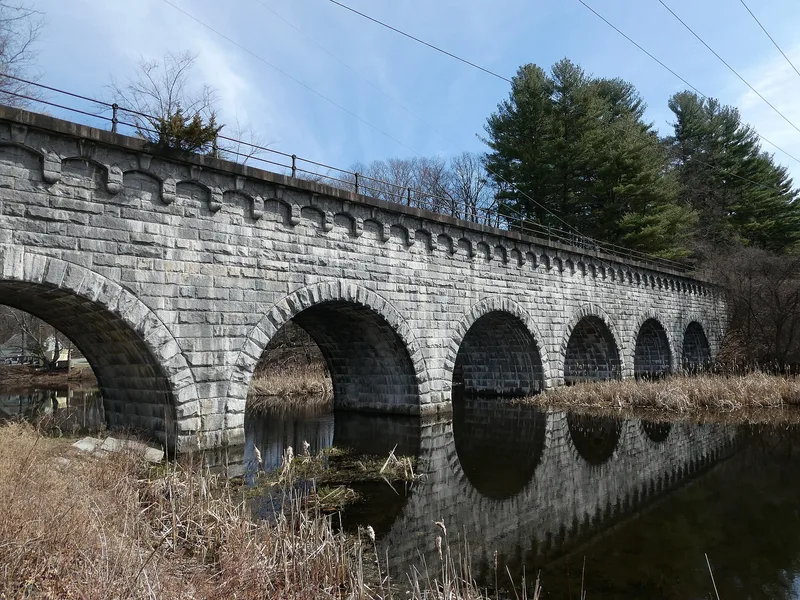
This twelve-mile aqueduct carried water from the Nashua River area at Clinton southeast to Sudbury Reservoir in Southborough. Built in 1896-98, it combines two miles of tunnel, seven miles of masonry conduit and three miles of open channel, with four chambers, an aqueduct bridge, six vehicular bridges and three small dams. Notable structures include the seven-arch, granite-faced Assabet River Bridge in Northborough and small granite-faced concrete arch bridges over the open channel. Designs came from the office of Chief Engineer Frederic P. Stearns, and several contractors built the work. It was the first project of the Metropolitan Water Board, created in 1895, and it supplemented the Sudbury reservoirs. After the Wachusett Reservoir opened in 1906-07, it conveyed the Boston area's principal supply until the Quabbin Reservoir was completed in the 1940s. The aqueduct was taken out of service when the Wachusett-Marlborough Tunnel bypassed it in the mid-1960s.
Machine-generated summary. This summary was generated by a language model from the official nomination document and has not been reviewed line by line by an editor. It may contain errors. Check the source document before relying on any detail. Source: nomination document (PDF) · catalog entry. Generated October 2026 (model claude-sonnet-5-5, prompt v1.0-2026-10-29).
| Period of significance | 1896-1926 |
|---|---|
| Areas of significance | Community Planning and Development, Engineering, Politics/Government, Architecture |
| Acreage | 180 |
| Boundary source | NPS cultural-resource GIS polygon |
| Full listing page | Wachusett Aqueduct Linear District (property record) |
What listing means for this property
This is a historic district. Buildings within its boundary are either contributing (they add to the district's significance) or non-contributing. Owners of contributing income-producing buildings can claim the 20% federal rehabilitation tax credit; homeowners should look at state credits. National Register districts impose no design review by themselves; a local historic district ordinance, if one exists, does (the difference explained).
General information, not legal or tax advice. Rules change; confirm with your State Historic Preservation Office or a qualified adviser.