Vintonville Historic District

Why it's listed
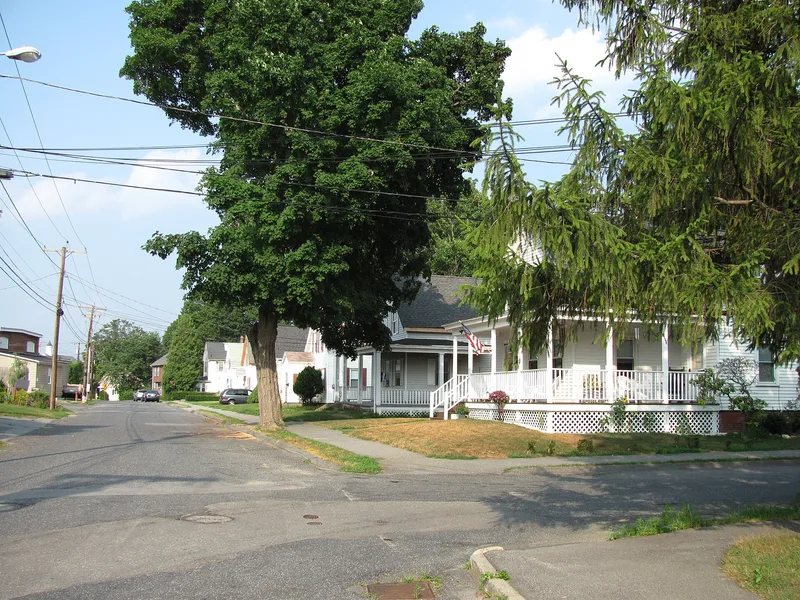
Vintonville is a compact neighborhood of modest houses next to the commercial center of Westborough, Massachusetts. It is named for Otis Vinton, an early owner who created house lots in the northern part. No streets existed here before 1830, and most building took place between 1860 and 1890, when lots on small, narrow lanes were filled. The most common type is the 1½-story gable-front cottage, some with Greek Revival or Italianate touches such as bracketed entry hoods. Nine Queen Anne houses on Beach Street, built in 1895 and 1896 by Bartlett & Linane, are the largest in the district. Former non-residential buildings include a meat market, a carpenter shop and a butter and cheese factory, all now homes. The area was listed for its connection to the town's industrial growth, the settlement of Irish immigrant families who worked in local mills and shops, and its largely intact collection of 19th-century housing. It holds 118 contributing resources, including 80 houses and period outbuildings.
Machine-generated summary. This summary was generated by a language model from the official nomination document and has not been reviewed line by line by an editor. It may contain errors. Check the source document before relying on any detail. Source: nomination document (PDF) · catalog entry. Generated October 2026 (model claude-sonnet-5-5, prompt v1.0-2026-10-29).
| Period of significance | 1850-1956 |
|---|---|
| Styles | Mid 19th Century: Greek Revival; Late Victorian: Italianate, Queen Anne; Other: vernacular |
| Areas of significance | Architecture, Community Planning and Development |
| Acreage | 20 |
| Boundary source | NPS cultural-resource GIS polygon |
| Full listing page | Vintonville Historic District (property record) |
What listing means for this property
This is a historic district. Buildings within its boundary are either contributing (they add to the district's significance) or non-contributing. Owners of contributing income-producing buildings can claim the 20% federal rehabilitation tax credit; homeowners should look at state credits. National Register districts impose no design review by themselves; a local historic district ordinance, if one exists, does (the difference explained).
General information, not legal or tax advice. Rules change; confirm with your State Historic Preservation Office or a qualified adviser.