View Street Historic District

Why it's listed
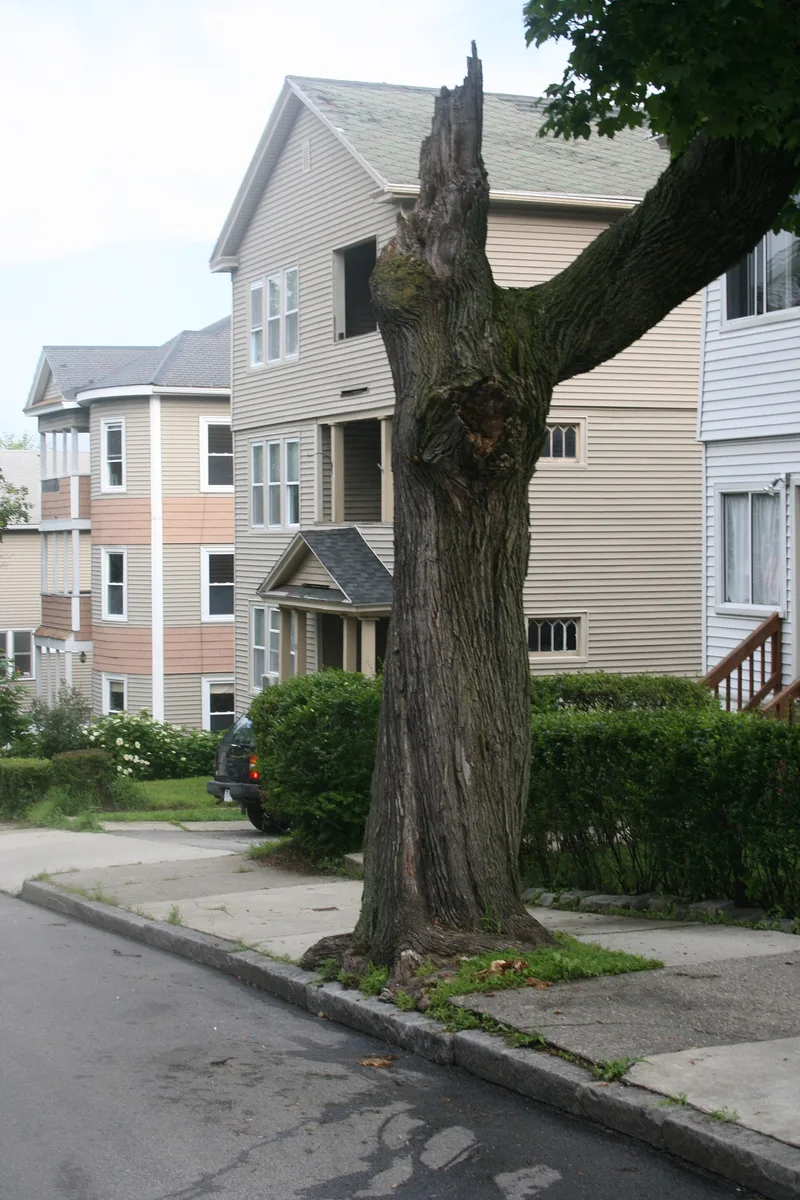
View Street, on the steep western slope of Vernon Hill in Worcester, holds a small district of 11 three-decker houses and six garages built between about 1916 and 1930. The houses reflect the last major phase of three-decker construction on the hill. Most have gable roofs, two have gambrel roofs and one has a hip roof. Common features include recessed three-tier porches, triple windows, 6/1 sash, and cladding of wood shingle and clapboard. Nine of the 11 houses contribute to the district; 9 and 16 View Street do not because of modern siding. The streets below Vernon Street drew skilled blue-collar and white-collar families of Irish, Swedish, Polish, Lithuanian and Jewish background, attracted by city views and streetcar access to downtown jobs. Early owners included a salesman, a woodworker, a foreman and several metal workers. The district was recognized for its local importance in working-class housing and its well-preserved mix of three-decker styles.
Machine-generated summary. This summary was generated by a language model from the official nomination document and has not been reviewed line by line by an editor. It may contain errors. Check the source document before relying on any detail. Source: nomination document (PDF) · catalog entry. Generated October 2026 (model claude-sonnet-5-5, prompt v1.0-2026-10-29).
| Period of significance | ca. 1916-1930 |
|---|---|
| Styles | Colonial Revival/Craftsman three-deckers |
| Areas of significance | Community Planning and Development, European, Architecture, Social History |
| Acreage | 1.8 |
| Boundary source | NPS cultural-resource GIS polygon |
| Full listing page | View Street Historic District (property record) |
What listing means for this property
This is a historic district. Buildings within its boundary are either contributing (they add to the district's significance) or non-contributing. Owners of contributing income-producing buildings can claim the 20% federal rehabilitation tax credit; homeowners should look at state credits. National Register districts impose no design review by themselves; a local historic district ordinance, if one exists, does (the difference explained).
General information, not legal or tax advice. Rules change; confirm with your State Historic Preservation Office or a qualified adviser.