Upper North Street Commercial District

Why it's listed
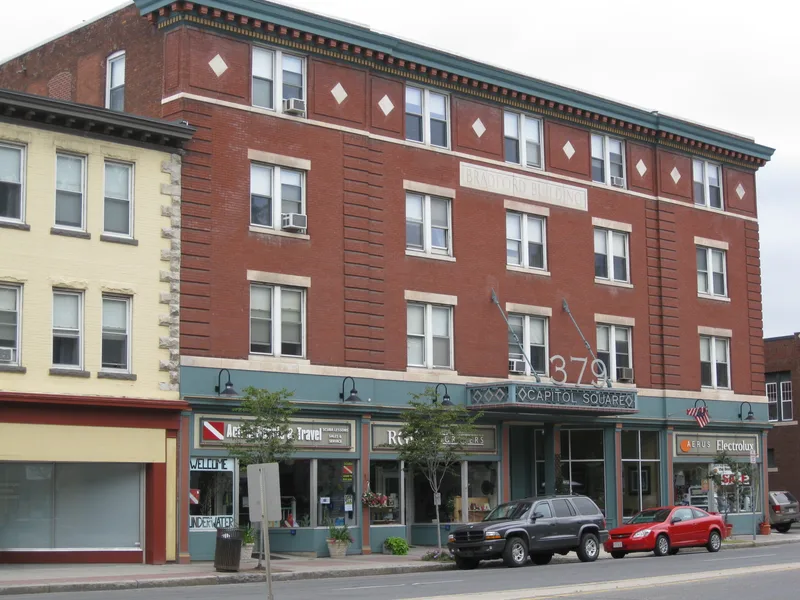
Upper North Street in Pittsfield is a five-block commercial corridor of mostly two- to four-story red brick buildings, with granite, marble and cast stone trim and metal cornices. It includes 26 contributing buildings, a mini-park, and several statues, boulders and a cast iron fence. Until the 1880s the street was largely residential. City incorporation in 1890, a trolley line in 1891 and the growth of electrical manufacturing encouraged owners to replace houses with commercial blocks. Most of the buildings date from the early 1890s to the late 1920s and show Classical Revival and Early 20th Century Commercial styling. Examples include the Blaisdell Block, the Coburn, and the cast stone Neo-Gothic Wood Brothers Building. The Blaisdell, Wood Brothers and Coburn were designed by George Haynes. The Gothic granite St. Joseph's Church, with its rectory and convent, sits behind a lawn and contrasts with the storefronts. Storefronts have often been altered, but upper floors remain largely intact.
Machine-generated summary. This summary was generated by a language model from the official nomination document and has not been reviewed line by line by an editor. It may contain errors. Check the source document before relying on any detail. Source: nomination document (PDF) · catalog entry. Generated October 2026 (model claude-sonnet-5-5, prompt v1.0-2026-10-29).
| Styles | Early 20th Century Commercial; Classical Revival; Renaissance Revival |
|---|---|
| Areas of significance | Architecture, Commerce, Social History |
| Acreage | 11 |
| Boundary source | NPS cultural-resource GIS polygon |
| Full listing page | Upper North Street Commercial District (property record) |
What listing means for this property
This is a historic district. Buildings within its boundary are either contributing (they add to the district's significance) or non-contributing. Owners of contributing income-producing buildings can claim the 20% federal rehabilitation tax credit; homeowners should look at state credits. National Register districts impose no design review by themselves; a local historic district ordinance, if one exists, does (the difference explained).
General information, not legal or tax advice. Rules change; confirm with your State Historic Preservation Office or a qualified adviser.