Tremont Nail Factory District

Why it's listed
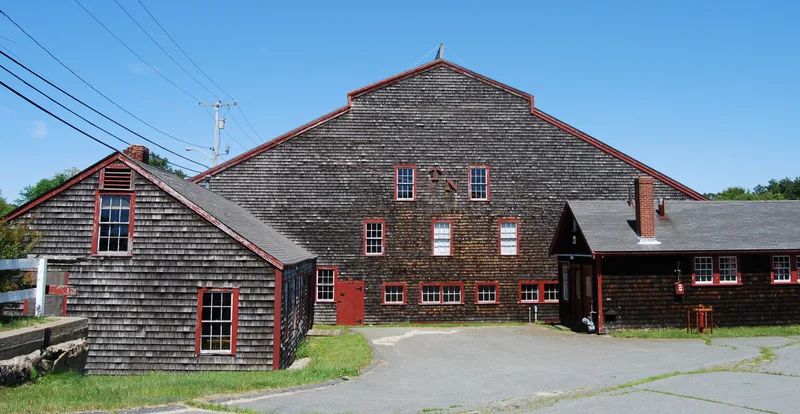
Beside Parker Mills Pond on Elm Street in Wareham, this group of nine buildings forms a working nail factory. The main building, a large shingled structure raised in 1848, measures 240 by 90 feet and carries a cupola with a cast iron bell dated 1851. Nearby stand an office converted from a Federal style house, pickling and storage sheds, a store house, a carpenter's shop, a former cooper's shop used as a store, and two workers' houses from the early 1900s. Nail making here traces to a cooperative of nail makers formed in Wareham in 1819, and the Tremont Nail Company has run the plant since the 1880s. Steel is pickled, cut into strips, then fed through cutting machines, several original to the factory, that cut and head each nail. The machines were once driven by a waterwheel and now run on electricity. It is recognized as the oldest cut nail factory still operating in Massachusetts.
Machine-generated summary. This summary was generated by a language model from the official nomination document and has not been reviewed line by line by an editor. It may contain errors. Check the source document before relying on any detail. Source: nomination document (PDF) · catalog entry. Generated October 2026 (model claude-sonnet-5-5, prompt v1.0-2026-10-29).
| Period of significance | 1800-1899 |
|---|---|
| Areas of significance | Community Planning and Development, Architecture |
| Acreage | 14 |
| Boundary source | NPS cultural-resource GIS polygon |
| Full listing page | Tremont Nail Factory District (property record) |
What listing means for this property
This is a historic district. Buildings within its boundary are either contributing (they add to the district's significance) or non-contributing. Owners of contributing income-producing buildings can claim the 20% federal rehabilitation tax credit; homeowners should look at state credits. National Register districts impose no design review by themselves; a local historic district ordinance, if one exists, does (the difference explained).
General information, not legal or tax advice. Rules change; confirm with your State Historic Preservation Office or a qualified adviser.