Strathmore Road Historic District

Why it's listed
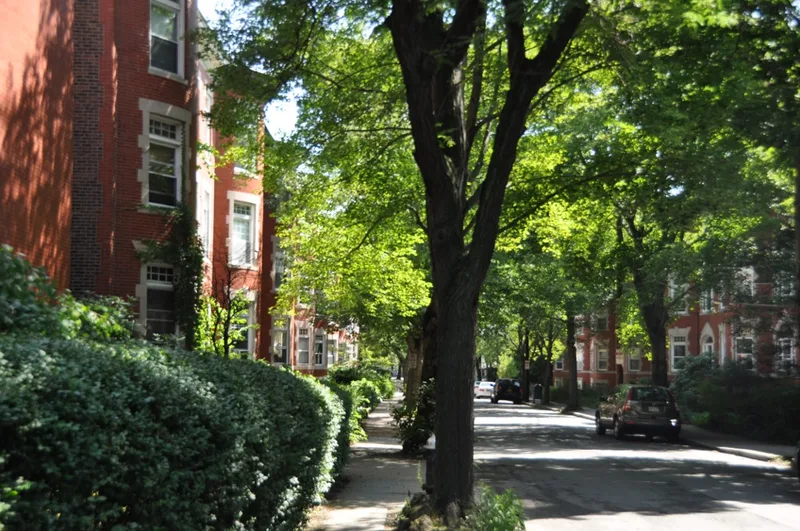
Strathmore Road is an L-shaped street just south of the western part of Beacon Street in Brookline. Together with adjoining Clinton Path, it holds six brick apartment buildings, mostly three and a half stories, built between 1904 and 1908. Most follow Federal and Classical Revival designs by architects Murdock Boyle and James Hutchinson, with limestone keystones, modillions, dentils and round-arched doorways. Two buildings, 40 Strathmore Road and 1 Clinton Path, show Romanesque Revival features such as rusticated brownstone. Several were designed to look like attached single-family houses. The land once belonged to the West End Land Company and was developed by George Johnston and Charles Newhall during a building boom that followed the streetcar extension along Beacon Street. Early tenants were middle-class professionals who worked in Boston. The streetscape has seen little change, with consistent scale, setback, front gardens and mature street trees. It was listed for its link to Brookline's growth as a streetcar suburb and for its cohesive architecture.
Machine-generated summary. This summary was generated by a language model from the official nomination document and has not been reviewed line by line by an editor. It may contain errors. Check the source document before relying on any detail. Source: nomination document (PDF) · catalog entry. Generated October 2026 (model claude-sonnet-5-5, prompt v1.0-2026-10-29).
| Period of significance | 1904-1908 |
|---|---|
| Styles | Federal/Classical Revival, with Romanesque Revival features on two buildings |
| Areas of significance | Community Planning and Development, Architecture |
| Acreage | 4 |
| Boundary source | NPS cultural-resource GIS polygon |
| Full listing page | Strathmore Road Historic District (property record) |
What listing means for this property
This is a historic district. Buildings within its boundary are either contributing (they add to the district's significance) or non-contributing. Owners of contributing income-producing buildings can claim the 20% federal rehabilitation tax credit; homeowners should look at state credits. National Register districts impose no design review by themselves; a local historic district ordinance, if one exists, does (the difference explained).
General information, not legal or tax advice. Rules change; confirm with your State Historic Preservation Office or a qualified adviser.