Spencer Town Center Historic District

Why it's listed
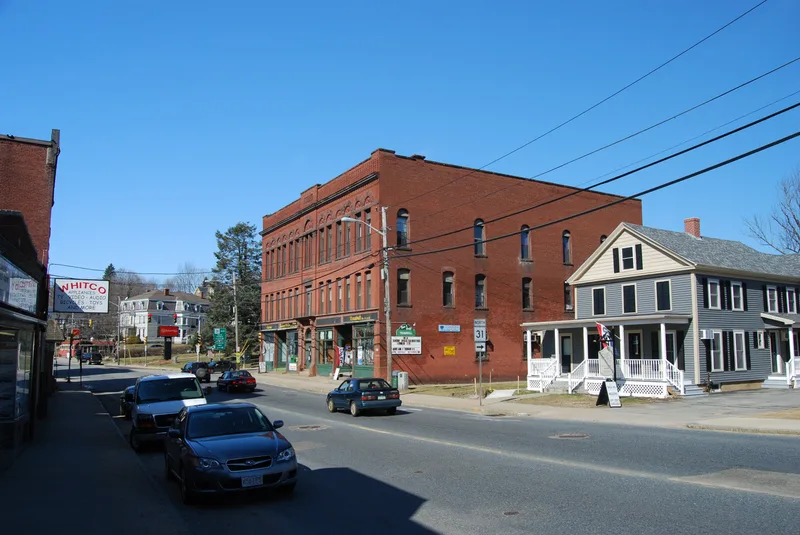
Spencer's town center is a stretch of Main Street lined with about 50 commercial, civic, religious and residential buildings, most dating from the second half of the 19th century. The area has served as the town's business and civic center since the 1743 establishment of a meeting house, training ground and cemetery, though no buildings from that early period survive. Growth in the shoe and boot industry, along with wire manufacturing, produced the brick factories, bank blocks and fine houses seen today. Wealthy manufacturers also donated major buildings, including the Sugden Library and the David Prouty High School. Worcester architects Elbridge Boyden and Stephen C. Earle designed several landmarks, among them Denny Hall, the First Congregational Church and the former Universalist Church. Styles range from Greek Revival and Italianate to Second Empire and Romanesque Revival. The 1926 Colonial Revival Memorial Town Hall is the last institutional building added. The district was listed for its architecture and for its links to industrialization and local manufacturers.
Machine-generated summary. This summary was generated by a language model from the official nomination document and has not been reviewed line by line by an editor. It may contain errors. Check the source document before relying on any detail. Source: nomination document (PDF) · catalog entry. Generated October 2026 (model claude-sonnet-5-5, prompt v1.0-2026-10-29).
| Period of significance | 1713-1929 |
|---|---|
| Styles | Variety of Victorian styles (Greek Revival, Italianate, Second Empire, Romanesque Revival, Richardsonian Romanesque) plus Colonial Revival and Classical Revival |
| Areas of significance | Industry, Community Planning and Development, Commerce, Architecture |
| Acreage | 25 |
| Boundary source | NPS cultural-resource GIS polygon |
| Full listing page | Spencer Town Center Historic District (property record) |
What listing means for this property
This is a historic district. Buildings within its boundary are either contributing (they add to the district's significance) or non-contributing. Owners of contributing income-producing buildings can claim the 20% federal rehabilitation tax credit; homeowners should look at state credits. National Register districts impose no design review by themselves; a local historic district ordinance, if one exists, does (the difference explained).
General information, not legal or tax advice. Rules change; confirm with your State Historic Preservation Office or a qualified adviser.