Southbridge-Sargent Manufacturing District

The National Park Service has not published a boundary polygon for this district; the map shows the listed properties inside it and the district's reference point.
Why it's listed
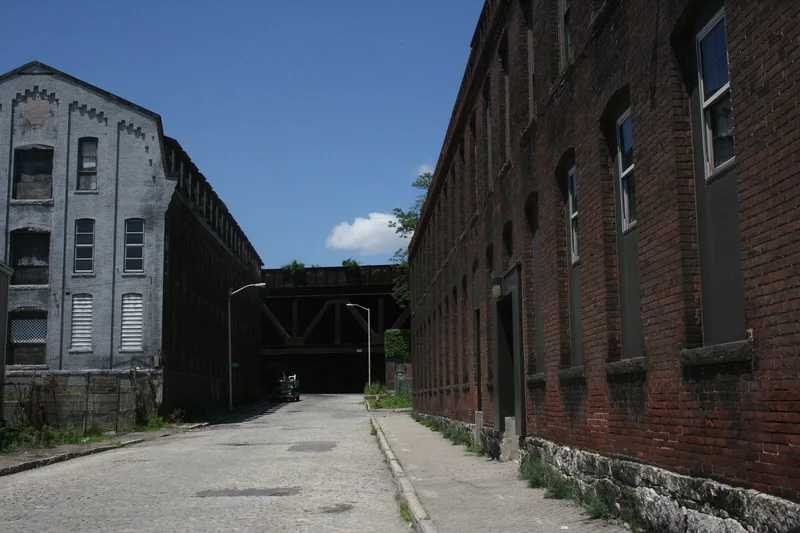
Three factory buildings near Worcester's railroad junction make up this district, which dates from 1866 to 1892. The construction of the rail lines in the mid-nineteenth century drew manufacturers to the area, known as the Junction, and it stayed an active industrial center until the mid-twentieth century. Later demolitions left only fragments of that past. The oldest building, the Sargent Card-Clothing Factory at 300 Southbridge Street, is a brick structure with a mansard-roofed third storey and a square tower at its west end. It housed a maker of machine cards for the textile industry. At 5 Sargent Street, the Rice and Griffin factory produced mouldings, doors and architectural ornament. The 1892 Whitcomb Manufacturing Company building at 125 Gold Street is a utilitarian two-storey brick building, and the firm made copying presses and machine tools. Together the buildings represent local card-clothing and building-materials manufacturing, and the properties remain in industrial or commercial use.
Machine-generated summary. This summary was generated by a language model from the official nomination document and has not been reviewed line by line by an editor. It may contain errors. Check the source document before relying on any detail. Source: nomination document (PDF) · catalog entry. Generated October 2026 (model claude-sonnet-5-5, prompt v1.0-2026-10-29).
| Period of significance | 1866-1892 |
|---|---|
| Styles | Second Empire and utilitarian |
| Areas of significance | Industry, Architecture |
| Acreage | 1.5 |
| Boundary source | not published |
| Full listing page | Southbridge-Sargent Manufacturing District (property record) |
What listing means for this property
This is a historic district. Buildings within its boundary are either contributing (they add to the district's significance) or non-contributing. Owners of contributing income-producing buildings can claim the 20% federal rehabilitation tax credit; homeowners should look at state credits. National Register districts impose no design review by themselves; a local historic district ordinance, if one exists, does (the difference explained).
General information, not legal or tax advice. Rules change; confirm with your State Historic Preservation Office or a qualified adviser.