South Street Historic District

Why it's listed
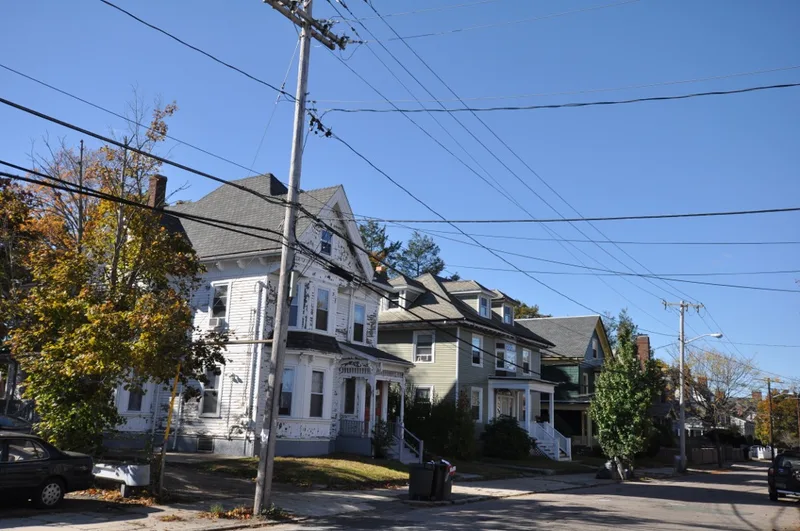
South Street in Brockton's Campello section holds a compact, cohesive block of twenty houses and the South Congregational Church, dating from the mid 19th to early 20th century. The buildings share similar setbacks, lot sizes, porches, bays and clapboard or shingle siding, yet they show many styles, including Italianate, Queen Anne, Shingle, Mission, Arts and Crafts and Colonial Revival. Notable examples include Brockton's only Mission style house at number 27, an Arts and Crafts house designed by J. Williams Beal at number 36, and the Romanesque church of 1854 by Towle and Foster. After a new road in 1886 reduced through traffic, the street became a desirable residential location. Many early residents were shoe industry owners and merchants, among them the Keith family, who built several houses and helped fund the church. Skilled craftsmen and foremen occupied more modest homes. A single modern ranch house is the only intrusion.
Machine-generated summary. This summary was generated by a language model from the official nomination document and has not been reviewed line by line by an editor. It may contain errors. Check the source document before relying on any detail. Source: nomination document (PDF) · catalog entry. Generated October 2026 (model claude-sonnet-5-5, prompt v1.0-2026-10-29).
| Period of significance | 1900- |
|---|---|
| Styles | Multiple styles: Italianate, Queen Anne, Shingle, Mission, Arts and Crafts, Colonial Revival, Greek Revival, Carpenter Gothic, and Romanesque (church) |
| Areas of significance | Industry, Architecture |
| Acreage | 6.1 |
| Boundary source | NPS cultural-resource GIS polygon |
| Full listing page | South Street Historic District (property record) |
What listing means for this property
This is a historic district. Buildings within its boundary are either contributing (they add to the district's significance) or non-contributing. Owners of contributing income-producing buildings can claim the 20% federal rehabilitation tax credit; homeowners should look at state credits. National Register districts impose no design review by themselves; a local historic district ordinance, if one exists, does (the difference explained).
General information, not legal or tax advice. Rules change; confirm with your State Historic Preservation Office or a qualified adviser.