South Egremont Village Historic District

Why it's listed
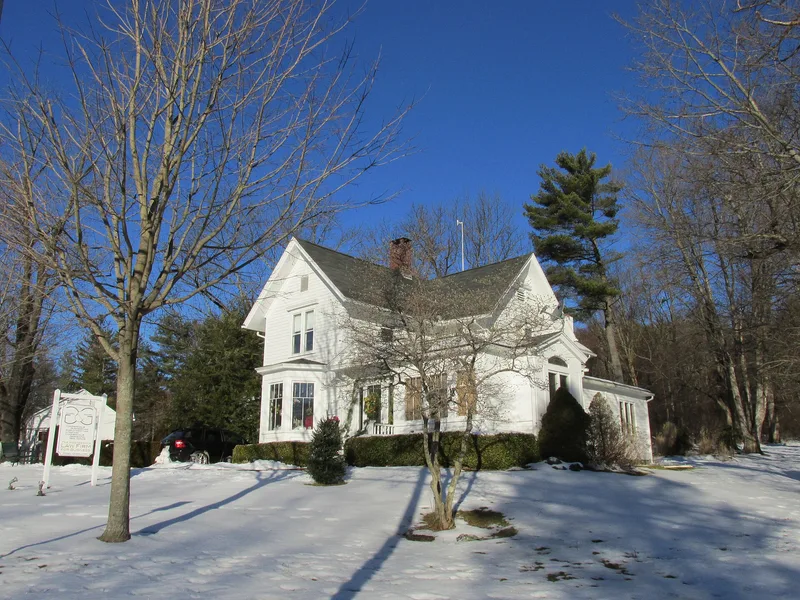
South Egremont Village is a compact Berkshire County settlement of about 375 acres stretched along Routes 23 and 41 beside Karner Brook. Its roughly fifty-nine historic buildings range from a 1761 brick gambrel-roofed cottage, the only one of its type in the county, to Federal and Greek Revival houses, a church built in 1832-33, and the 1831-32 Mount Everett Academy. Local carpenters James Reasoner, Abner Hull and Jona Baldwin built several houses sharing a distinctive elongated fanlight detail. The village grew around mills, a marble business, shoemaking and, from 1845, David Dalzell's axle factory, whose workers' housing on Shop Hill still stands. Decline in the 1920s gave way to a preservation-minded revival in the 1930s led by Major Hugh Smiley, who promoted the village to tourists. Because so much of the 19th century streetscape survives, the district was listed for its architecture, its notable residents and its picture of rural community development. The Dalzell factory site also holds archaeological potential.
Machine-generated summary. This summary was generated by a language model from the official nomination document and has not been reviewed line by line by an editor. It may contain errors. Check the source document before relying on any detail. Source: nomination document (PDF) · catalog entry. Generated October 2026 (model claude-sonnet-5-5, prompt v1.0-2026-10-29).
| Styles | Federal, Greek Revival, and late 19th century styles incorporating Gothic Revival, Italianate and Shingle Style treatments with vernacular design |
|---|---|
| Areas of significance | Industry, Architecture, Agriculture |
| Acreage | 375 |
| Boundary source | NPS cultural-resource GIS polygon |
| Full listing page | South Egremont Village Historic District (property record) |
What listing means for this property
This is a historic district. Buildings within its boundary are either contributing (they add to the district's significance) or non-contributing. Owners of contributing income-producing buildings can claim the 20% federal rehabilitation tax credit; homeowners should look at state credits. National Register districts impose no design review by themselves; a local historic district ordinance, if one exists, does (the difference explained).
General information, not legal or tax advice. Rules change; confirm with your State Historic Preservation Office or a qualified adviser.