Sleepy Hollow Cemetery

Why it's listed
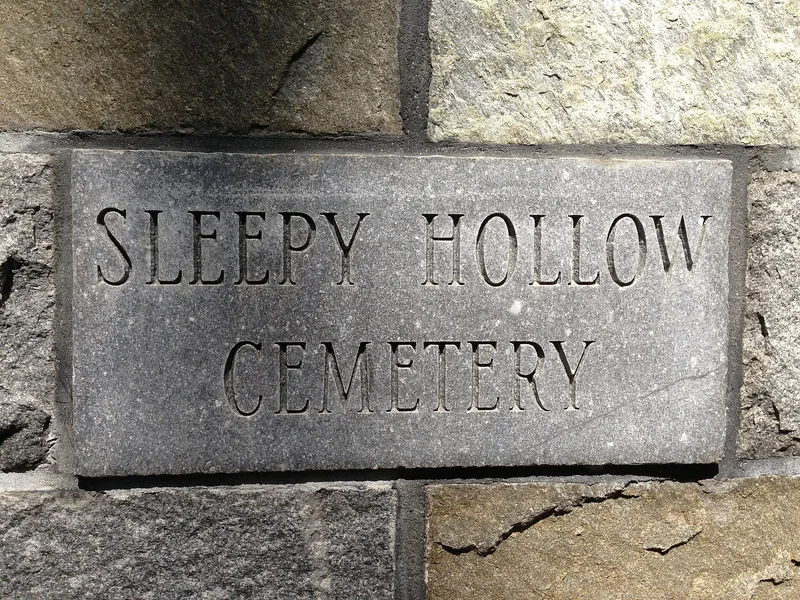
Sleepy Hollow Cemetery occupies nearly 32 acres east of Concord's town center, along Bedford Street and Court Lane. It grew in four parts. The earliest, the New Burying Ground of 1823, follows an older pattern of rectangular grave blocks and alleys. Sleepy Hollow proper opened in 1855 and was designed by Horace W.S. Cleveland, with winding drives, stone steps, native plantings and a man-made pond, Cat's Pond, laid out by Henry David Thoreau. The former Middlesex Agricultural Society fairgrounds were added in 1869, followed by the Pines, bought in 1932. The grounds contain more than 1,500 markers in the oldest section alone, ranging from carved slate stones to marble and granite monuments, along with tombs, a Civil War memorial cannon and the 1909 Melvin Memorial sculpture. Authors' Ridge holds the family plots of Thoreau, Hawthorne, Alcott and Emerson. The only buildings are an 1849 former schoolhouse, now the cemetery office, and a small toolhouse.
Machine-generated summary. This summary was generated by a language model from the official nomination document and has not been reviewed line by line by an editor. It may contain errors. Check the source document before relying on any detail. Source: nomination document (PDF) · catalog entry. Generated October 2026 (model claude-sonnet-5-5, prompt v1.0-2026-10-29).
| Areas of significance | Art, Architecture, Community Planning and Development, Landscape Architecture, Social History |
|---|---|
| Acreage | 31.6 |
| Boundary source | NPS cultural-resource GIS polygon |
| Full listing page | Sleepy Hollow Cemetery (property record) |
What listing means for this property
This is a historic district. Buildings within its boundary are either contributing (they add to the district's significance) or non-contributing. Owners of contributing income-producing buildings can claim the 20% federal rehabilitation tax credit; homeowners should look at state credits. National Register districts impose no design review by themselves; a local historic district ordinance, if one exists, does (the difference explained).
General information, not legal or tax advice. Rules change; confirm with your State Historic Preservation Office or a qualified adviser.