Shrewsbury Historic District

Why it's listed
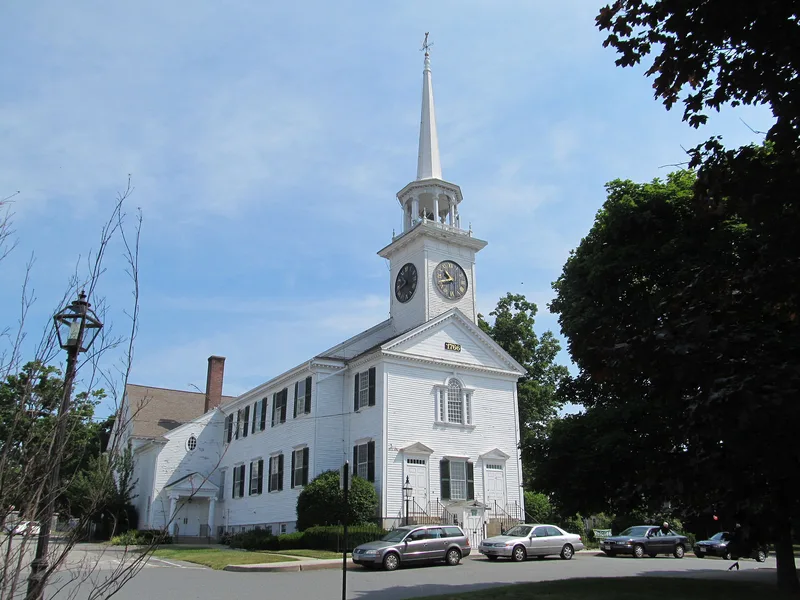
Shrewsbury's town common is ringed by a compact group of ten buildings that trace the community's growth from its founding in 1716. The First Congregational Church of 1766, built by master builder Daniel Hemenway, anchors the group; it reused planks and timbers from the 1721 meeting house and was later moved and turned to face south. Nearby are the Brick School House of 1830, the Reverend Joseph Sumner House of 1797, and Federal houses including the Samuel Haven, Philo Slocum, Jonas Stone and Reverend George Allen houses. The Haven House served as an underground railroad station during the Civil War. Twentieth century additions include the Renaissance Revival public library of 1903, given to the town by Jubal Howe, a fire station and an office building. Broad lawns and a tree-shaded common set the district apart from the commercial area nearby. The grouping was listed for its architecture and for its link to the town's development.
Machine-generated summary. This summary was generated by a language model from the official nomination document and has not been reviewed line by line by an editor. It may contain errors. Check the source document before relying on any detail. Source: nomination document (PDF) · catalog entry. Generated October 2026 (model claude-sonnet-5-5, prompt v1.0-2026-10-29).
| Period of significance | 1900- |
|---|---|
| Styles | Federal houses and a Renaissance Revival public library, alongside an eighteenth-century meeting house |
| Areas of significance | Military, Architecture, Religion |
| Acreage | 14 |
| Boundary source | NPS cultural-resource GIS polygon |
| Full listing page | Shrewsbury Historic District (property record) |
What listing means for this property
This is a historic district. Buildings within its boundary are either contributing (they add to the district's significance) or non-contributing. Owners of contributing income-producing buildings can claim the 20% federal rehabilitation tax credit; homeowners should look at state credits. National Register districts impose no design review by themselves; a local historic district ordinance, if one exists, does (the difference explained).
General information, not legal or tax advice. Rules change; confirm with your State Historic Preservation Office or a qualified adviser.