Shirley Shaker Village

Why it's listed
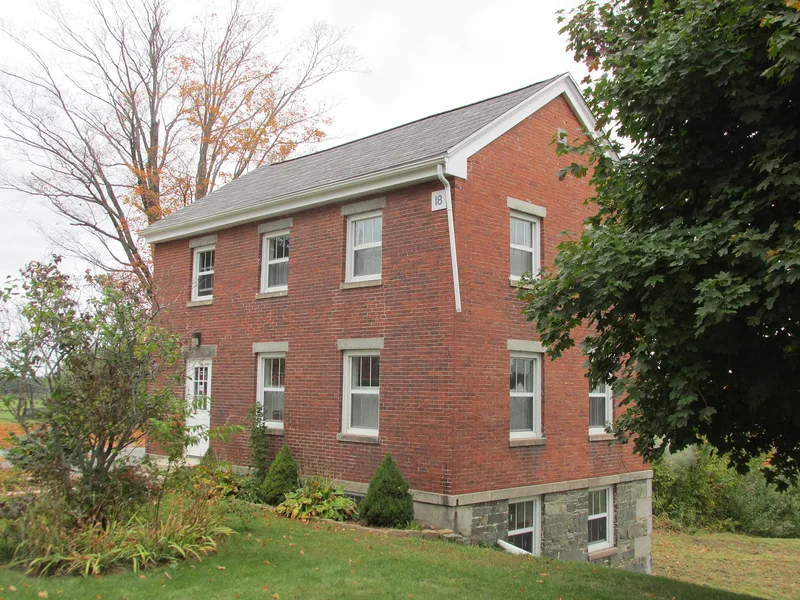
Shirley Shaker Village occupies land on both sides of Harvard Road in Shirley and northern Lancaster, Massachusetts. The Shaker community began there in 1793 on land given by four local citizens. Forty-four adult members signed the Shirley Covenant in 1797, and by 1853 about 150 people lived in the village, organized into North, Church and South Families. Applesauce was the main industry, alongside broom-making, mops, jellies, herbs and garden seed. The society dissolved in 1908, and the Commonwealth bought the property for an Industrial School for Boys, which moved and altered several buildings. Nineteen buildings remain in the district, fourteen from the original village of twenty-six structures. They include brick and clapboard buildings, among them the Administration Building, the North Family Office and the North Family Farmhouse. The village is valued as a surviving example of New England Shaker settlement, and it is now part of a state correctional complex.
Machine-generated summary. This summary was generated by a language model from the official nomination document and has not been reviewed line by line by an editor. It may contain errors. Check the source document before relying on any detail. Source: nomination document (PDF) · catalog entry. Generated October 2026 (model claude-sonnet-5-5, prompt v1.0-2026-10-29).
| Areas of significance | European, Architecture, Religion |
|---|---|
| Acreage | 11 |
| Boundary source | NPS cultural-resource GIS polygon |
| Full listing page | Shirley Shaker Village (property record) |
What listing means for this property
This is a historic district. Buildings within its boundary are either contributing (they add to the district's significance) or non-contributing. Owners of contributing income-producing buildings can claim the 20% federal rehabilitation tax credit; homeowners should look at state credits. National Register districts impose no design review by themselves; a local historic district ordinance, if one exists, does (the difference explained).
General information, not legal or tax advice. Rules change; confirm with your State Historic Preservation Office or a qualified adviser.