Shadow Brook Farm Historic District
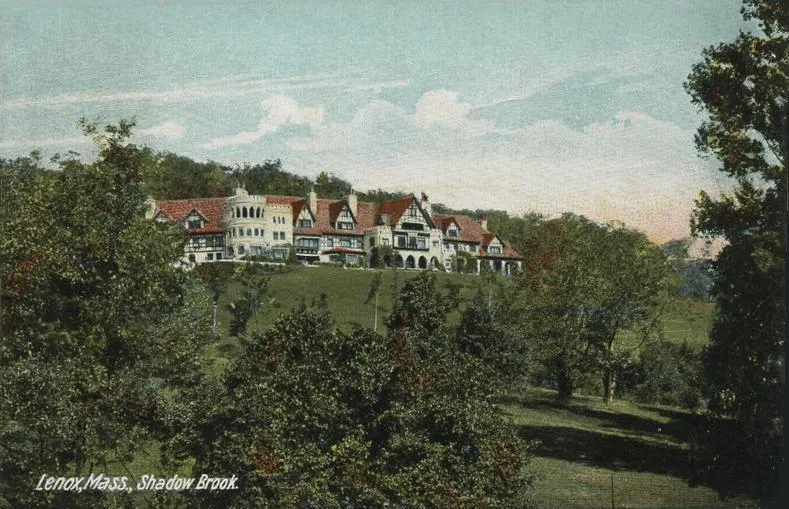

Why it's listed
Shadow Brook Farm is a complex of half-timbered Tudor Revival farm buildings on Route 183 in Stockbridge, laid out as a quadrangle near Stockbridge Bowl. Construction began in 1891 as the model farm for Shadow Brook, the huge mansion of New York financier Anson Phelps Stokes, Sr. The farm supplied the family with milk, eggs, meat, vegetables and flowers. Its dairy, stables, cow barn, ice house, laundry and lodge were all built in one architectural scheme, and even an older cottage was altered to match. The design is attributed to Pittsfield architect H. Neill Wilson. From 1906 to 1958 the superintendent's house served as the summer home of Anson Phelps Stokes, Jr., an educator, clergyman and advocate for black education. Since 1964 a school has occupied the farm, adding buildings but leaving most original work intact. The property was recognized for its agricultural and architectural importance at the local level, and for the quality and number of its surviving structures among Berkshire estate farms.
Machine-generated summary. This summary was generated by a language model from the official nomination document and has not been reviewed line by line by an editor. It may contain errors. Check the source document before relying on any detail. Source: nomination document (PDF) · catalog entry. Generated October 2026 (model claude-sonnet-5-5, prompt v1.0-2026-10-29).
| Period of significance | 1891-1938 |
|---|---|
| Styles | Tudor Revival |
| Areas of significance | Community Planning and Development, Agriculture, Entertainment/Recreation, Architecture |
| Acreage | 26 |
| Boundary source | NPS cultural-resource GIS polygon |
| Full listing page | Shadow Brook Farm Historic District (property record) |
What listing means for this property
This is a historic district. Buildings within its boundary are either contributing (they add to the district's significance) or non-contributing. Owners of contributing income-producing buildings can claim the 20% federal rehabilitation tax credit; homeowners should look at state credits. National Register districts impose no design review by themselves; a local historic district ordinance, if one exists, does (the difference explained).
General information, not legal or tax advice. Rules change; confirm with your State Historic Preservation Office or a qualified adviser.