Scott's Woods Historic District

Why it's listed
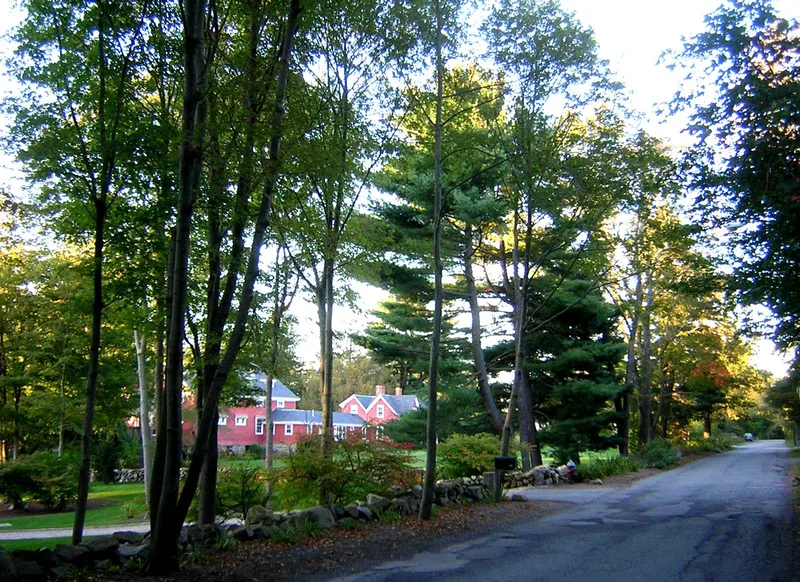
Scott's Woods is a semirural residential district of about 123 acres along Hillside Street in southern Milton, running from Randolph Avenue to the Blue Hills Reservation. It takes its name from the Scott family, believed to have settled the area in the early 18th century. The district contains 88 resources, 73 percent of which contribute to its character. Most are modest one-and-a-half to two-and-a-half-story wood houses, along with barns and garages, set on one- to four-acre lots behind fieldstone walls. Their styles span 1713 to 1932 and include Colonial, Georgian, Federal, Greek Revival and Colonial Revival. One First Period house, the Bernard Capen House, was moved from Dorchester in 1909. The area was settled by independent farmers, and several families, including the Kennedys and Tuckers, ran bakeries. The Thayers operated a floriculture business from 1879. Suburban subdivision of farmland began in the early 1900s and was completed after World War II, but few period buildings have since been lost or significantly altered.
Machine-generated summary. This summary was generated by a language model from the official nomination document and has not been reviewed line by line by an editor. It may contain errors. Check the source document before relying on any detail. Source: nomination document (PDF) · catalog entry. Generated October 2026 (model claude-sonnet-5-5, prompt v1.0-2026-10-29).
| Styles | Colonial: New England Colonial, Georgian; Early Republic: Federal, Mid 19th Century, Greek Revival; Late Victorian: Victorian; Colonial Revival |
|---|---|
| Areas of significance | Agriculture, Architecture |
| Acreage | 122.6 |
| Boundary source | NPS cultural-resource GIS polygon |
| Full listing page | Scott's Woods Historic District (property record) |
What listing means for this property
This is a historic district. Buildings within its boundary are either contributing (they add to the district's significance) or non-contributing. Owners of contributing income-producing buildings can claim the 20% federal rehabilitation tax credit; homeowners should look at state credits. National Register districts impose no design review by themselves; a local historic district ordinance, if one exists, does (the difference explained).
General information, not legal or tax advice. Rules change; confirm with your State Historic Preservation Office or a qualified adviser.