Saxonville Historic District

Why it's listed
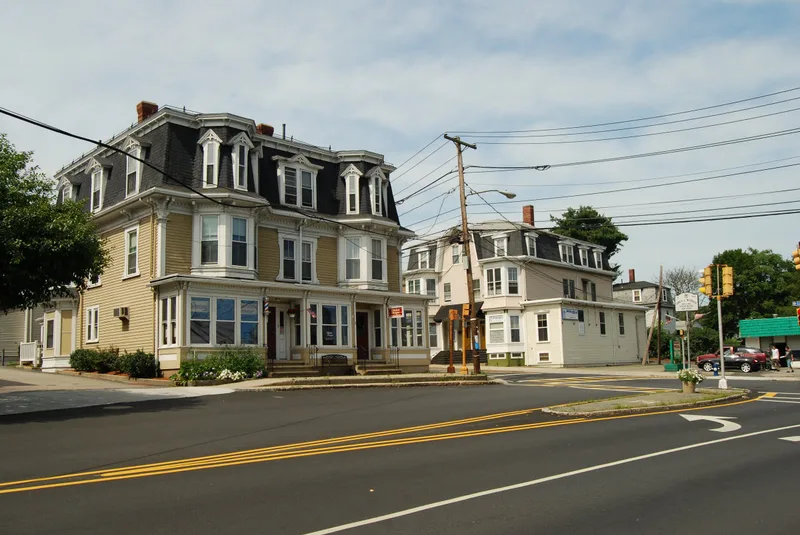
Saxonville is a mill village in northeast Framingham, Massachusetts, that developed around falls on the Sudbury River, where a dam provided power for the town's earliest industries. The Roxbury Carpet Mills complex, rebuilt after an 1883 fire, faces the village center and includes a large 1884 brick mill with twin mansard-roofed corner towers and a central bell tower. Around it, the district preserves about 56 acres of company-built workers' housing, including center-chimney cottages from the 1820s and 1830s, replicated Greek Revival double houses on Central Street, and a nine-entry tenement of the 1870s. Civic buildings include the Greek Revival Athenaeum Hall of 1845, a brick fire station and the 1922 Stapleton School. The Mill Store Block was remodeled around 1880 in the Second Empire style. The district was recognized for its intact pattern of mill, housing and village buildings, which remains legible today. Mill-owned homes were sold at auction in 1938.
Machine-generated summary. This summary was generated by a language model from the official nomination document and has not been reviewed line by line by an editor. It may contain errors. Check the source document before relying on any detail. Source: nomination document (PDF) · catalog entry. Generated October 2026 (model claude-sonnet-5-5, prompt v1.0-2026-10-29).
| Styles | Greek Revival, Italianate, Second Empire |
|---|---|
| Areas of significance | Industry, Architecture |
| Acreage | 56.8 |
| Boundary source | NPS cultural-resource GIS polygon |
| Full listing page | Saxonville Historic District (property record) |
What listing means for this property
This is a historic district. Buildings within its boundary are either contributing (they add to the district's significance) or non-contributing. Owners of contributing income-producing buildings can claim the 20% federal rehabilitation tax credit; homeowners should look at state credits. National Register districts impose no design review by themselves; a local historic district ordinance, if one exists, does (the difference explained).
General information, not legal or tax advice. Rules change; confirm with your State Historic Preservation Office or a qualified adviser.