Salem Willows Historic District (Additional Documentation)

Why it's listed
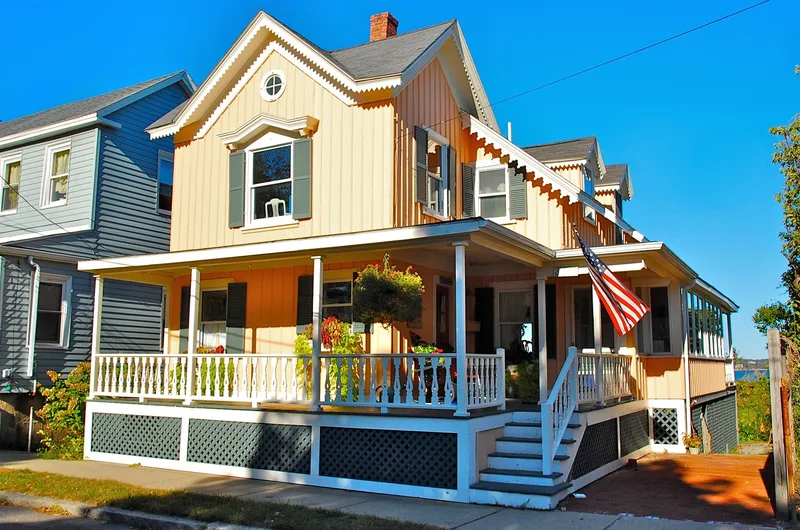
Salem Willows is a coastal district on the tip of Salem Neck, in northeastern Massachusetts, that combines a public waterfront park with dense neighborhoods of summer cottages. About a third of its roughly 100 acres is park land with mature trees, beaches and views toward Beverly. The rest is closely built with mostly two-story wood-frame houses dating from about 1870 to 1935. Styles include Queen Anne, Shingle, Italianate, Colonial Revival and a simple vernacular Victorian Eclectic, and nearly every house has a porch. The area developed after merchant Daniel Gardner bought the former Derby farm in 1875 and laid out streets and house lots, with deeds restricting commercial uses. Early cottages clustered on Juniper Point, and the Richard Derby Sr. House of 1759 is the only earlier building. The district was recognized for this intact resort landscape, in which scale, massing and the constant presence of the sea give a distinct sense of place. It counts 226 contributing resources.
Machine-generated summary. This summary was generated by a language model from the official nomination document and has not been reviewed line by line by an editor. It may contain errors. Check the source document before relying on any detail. Source: nomination document (PDF) · catalog entry. Generated October 2026 (model claude-sonnet-5-5, prompt v1.0-2026-10-29).
| Styles | Late Victorian (Eclectic, Queen Anne, Shingle Style, Italianate); Colonial Revival; Bungalow/Craftsman |
|---|---|
| Areas of significance | Social History, Entertainment/Recreation, Community Planning and Development, Architecture, Ethnic Heritage-Black |
| Acreage | 100 |
| Boundary source | NPS cultural-resource GIS polygon |
| Full listing page | Salem Willows Historic District (Additional Documentation) (property record) |
What listing means for this property
This is a historic district. Buildings within its boundary are either contributing (they add to the district's significance) or non-contributing. Owners of contributing income-producing buildings can claim the 20% federal rehabilitation tax credit; homeowners should look at state credits. National Register districts impose no design review by themselves; a local historic district ordinance, if one exists, does (the difference explained).
General information, not legal or tax advice. Rules change; confirm with your State Historic Preservation Office or a qualified adviser.