Salem Maritime National Historic Site

Why it's listed
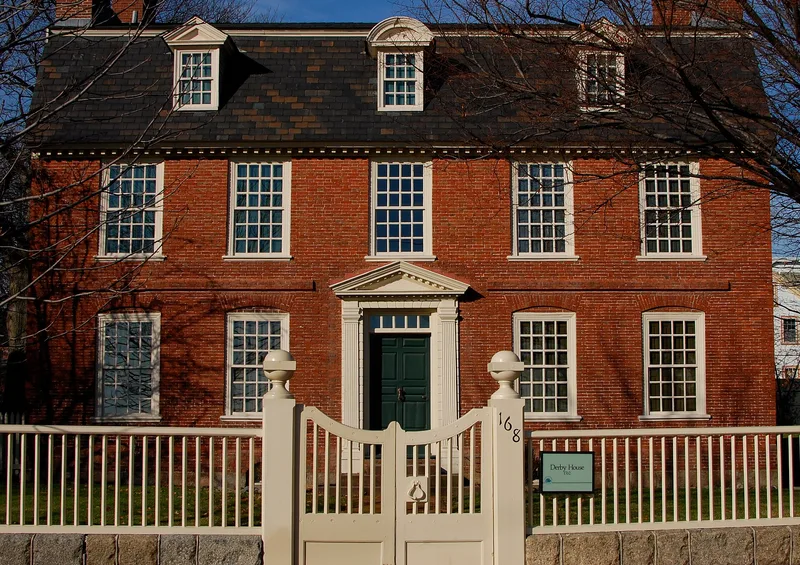
Salem Maritime National Historic Site occupies about nine acres of waterfront on Derby Street in Salem, Massachusetts. It holds seven historic buildings, a historic foundation and two wharves, among them the 1819 brick Custom House and Bonded Warehouse, the 1761 Derby House, the Narbonne House begun around 1670, the 1829 Scale House, the Hawkes House, and Derby and Central Wharves. All have been altered through use and restoration. The site matters because it shows how New England shipping helped build the early American economy. During the Revolution, Salem was the only major American port the British did not close, and Derby Wharf served as a base for privateers. After the war, Salem merchants opened trade routes to China, India, Sumatra and elsewhere. Customs duties collected at the port provided a significant share of federal revenue, and the surviving structures give a picture of an early 19th century waterfront.
Machine-generated summary. This summary was generated by a language model from the official nomination document and has not been reviewed line by line by an editor. It may contain errors. Check the source document before relying on any detail. Source: nomination document (PDF) · catalog entry. Generated October 2026 (model claude-sonnet-5-5, prompt v1.0-2026-10-29).
| Period of significance | 18th Century (specific dates 1819, 1761, 1829) |
|---|---|
| Areas of significance | Commerce, Transportation, Architecture, Maritime History |
| Acreage | 10.2 |
| Boundary source | NPS cultural-resource GIS polygon |
| Full listing page | Salem Maritime National Historic Site (property record) |
What listing means for this property
This is a historic district. Buildings within its boundary are either contributing (they add to the district's significance) or non-contributing. Owners of contributing income-producing buildings can claim the 20% federal rehabilitation tax credit; homeowners should look at state credits. National Register districts impose no design review by themselves; a local historic district ordinance, if one exists, does (the difference explained).
General information, not legal or tax advice. Rules change; confirm with your State Historic Preservation Office or a qualified adviser.