Sacred Heart Church Historic District

Why it's listed
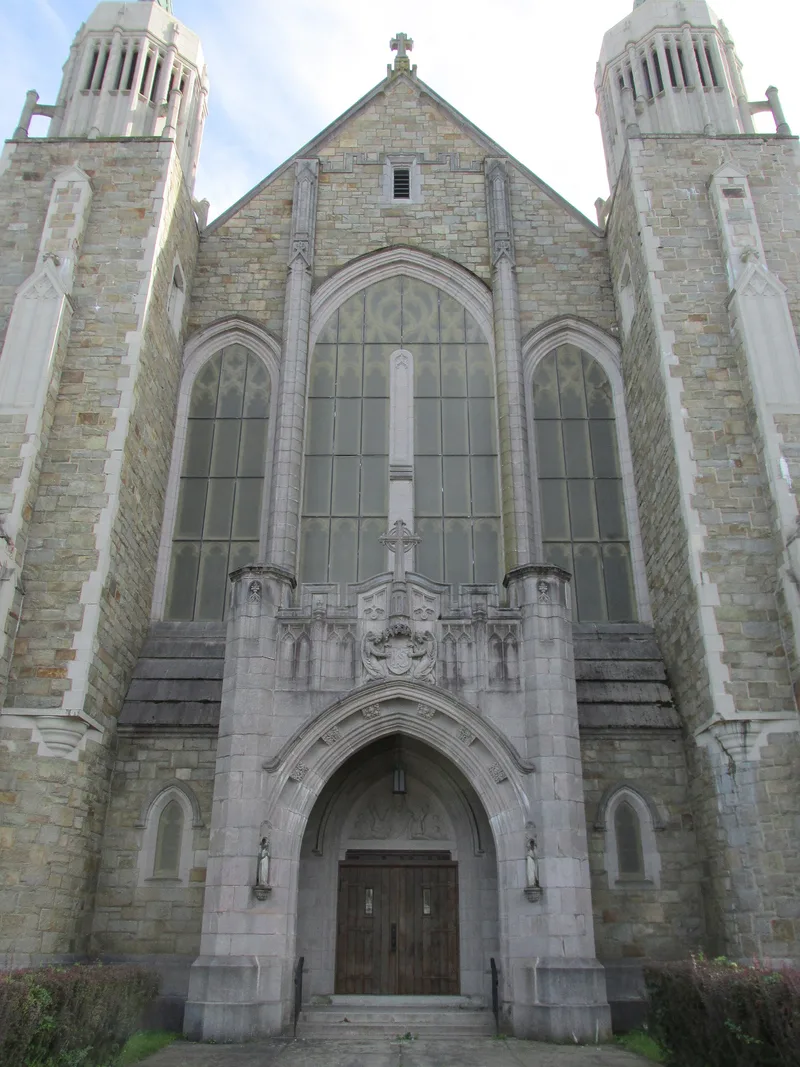
Sacred Heart Church Historic District is a group of four parish buildings on tree-shaded grounds in an urban three-decker neighborhood of Southbridge, close to the American Optical Company. The dominant building is the 1926 stone Neo-Gothic church on Charlton Street, with twin facade towers, buttresses, tall Gothic windows and slim spires. Nearby stand the brick rectory and convent of about 1909 and a large brick school facing Mechanic Street, all in a restrained Classical or Colonial Revival manner. The parish was founded in 1908 because the original French Canadian parish, Notre Dame, could no longer hold the growing Franco-American population. Its boundaries took in the area known as The Flats. A $70,000 gift from Notre Dame supported the start, and the school opened in 1910 under the Sisters of the Assumption of Nicolet. Services were held in the school until the church was completed. By 1919 the parish served about 600 families, and the school had 400 students.
Machine-generated summary. This summary was generated by a language model from the official nomination document and has not been reviewed line by line by an editor. It may contain errors. Check the source document before relying on any detail. Source: nomination document (PDF) · catalog entry. Generated October 2026 (model claude-sonnet-5-5, prompt v1.0-2026-10-29).
| Period of significance | 1908-1926 |
|---|---|
| Styles | Neo-Gothic (church); Colonial Revival / Classical Revival (school, rectory, convent) |
| Areas of significance | Industry, Architecture |
| Acreage | 2.3 |
| Boundary source | NPS cultural-resource GIS polygon |
| Full listing page | Sacred Heart Church Historic District (property record) |
What listing means for this property
This is a historic district. Buildings within its boundary are either contributing (they add to the district's significance) or non-contributing. Owners of contributing income-producing buildings can claim the 20% federal rehabilitation tax credit; homeowners should look at state credits. National Register districts impose no design review by themselves; a local historic district ordinance, if one exists, does (the difference explained).
General information, not legal or tax advice. Rules change; confirm with your State Historic Preservation Office or a qualified adviser.