Rocks Village Historic District

Why it's listed
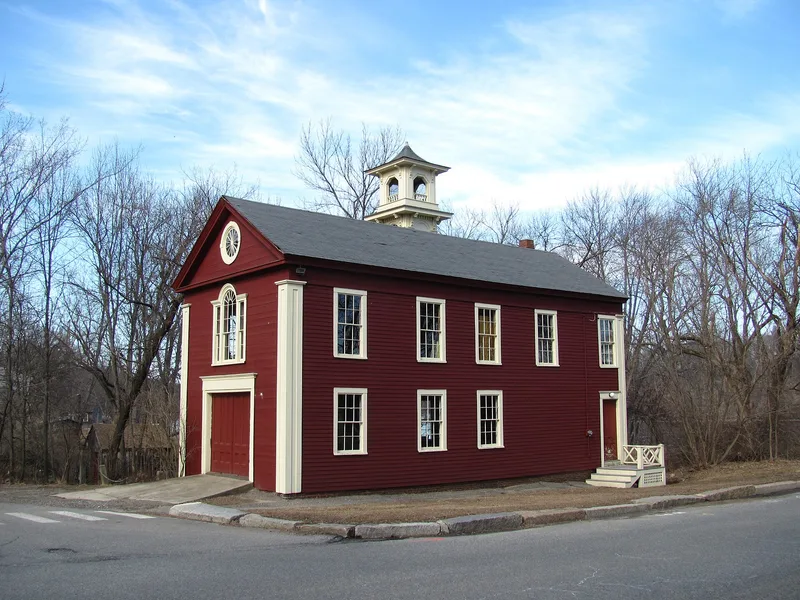
Rocks Village is a small riverside community in northeastern Haverhill, Massachusetts, where 25 buildings line Wharf Lane, River Road and East Main Street beside the Merrimack River. It began as a ferry crossing in 1640, and a covered bridge to West Newbury followed in 1795; the present steel bridge dates from 1905. Fifteen buildings are from the eighteenth century, eight from the nineteenth and two from the twentieth. Residents ran ferries and built an economy on farming, shipbuilding, fishing and making shoes and horncombs. Notable buildings include the Ingersoll House, showing the influence of Samuel McIntire, and the Ingalls or Countess House, which holds murals by Rufus Porter and inspired a Whittier poem. The John Swett House has an unusual angled chimney, and the 1840 Hand Tub House is now a museum. The district was listed as a nearly unchanged pre-industrial village with literary and artistic associations.
Machine-generated summary. This summary was generated by a language model from the official nomination document and has not been reviewed line by line by an editor. It may contain errors. Check the source document before relying on any detail. Source: nomination document (PDF) · catalog entry. Generated October 2026 (model claude-sonnet-5-5, prompt v1.0-2026-10-29).
| Period of significance | 1700-1899 |
|---|---|
| Areas of significance | Commerce, Art, Transportation, Literature, Architecture |
| Acreage | 50 |
| Boundary source | NPS cultural-resource GIS polygon |
| Full listing page | Rocks Village Historic District (property record) |
What listing means for this property
This is a historic district. Buildings within its boundary are either contributing (they add to the district's significance) or non-contributing. Owners of contributing income-producing buildings can claim the 20% federal rehabilitation tax credit; homeowners should look at state credits. National Register districts impose no design review by themselves; a local historic district ordinance, if one exists, does (the difference explained).
General information, not legal or tax advice. Rules change; confirm with your State Historic Preservation Office or a qualified adviser.