Rockport Downtown Main Street Historic District

Why it's listed
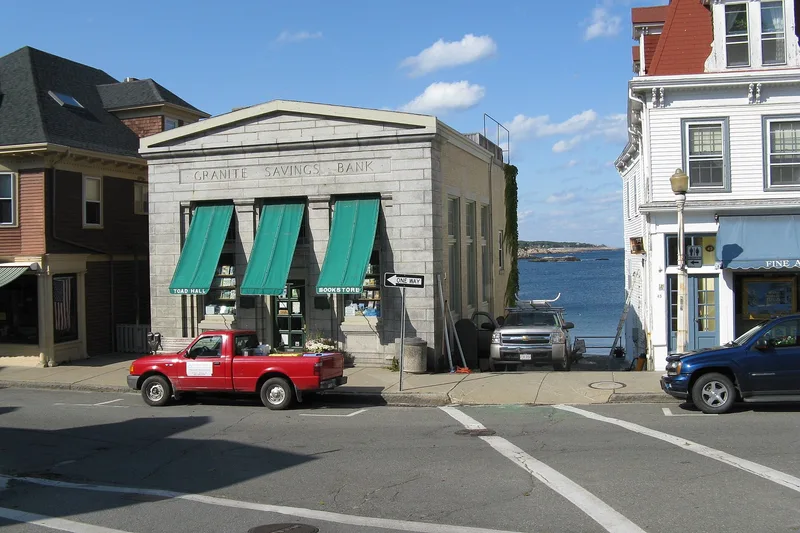
Rockport's downtown Main Street district covers 28 buildings along the curve of Main Street beside Sandy Bay, plus a few on Cleaves and Jewett Streets. Most are commercial, joined by three churches, a library, inns, guest houses and several residences. Styles range from Federal houses of the early 1800s to Italianate and Mansard commercial blocks, a Gothic-inspired church and a Richardsonian Romanesque hall. The First Congregational Church, with its cornerstone laid in 1803, is the focal point. Beside it are the Jewett House of 1806 and the home of the first pastor, whose original section dates to 1753. The 1787 Tavern was a stagecoach depot and the scene of the 1856 Hannah Jumper hatchet raid on illegal liquor sellers. The Carnegie Library and Granite Savings Bank were built of local Rockport granite. The district is significant as the center of early settlement and for the growth of a parish into a commercial area. Buildings are mostly two to three stories, with alterations mainly to storefronts.
Machine-generated summary. This summary was generated by a language model from the official nomination document and has not been reviewed line by line by an editor. It may contain errors. Check the source document before relying on any detail. Source: nomination document (PDF) · catalog entry. Generated October 2026 (model claude-sonnet-5-5, prompt v1.0-2026-10-29).
| Period of significance | 1700-1799, 1800-1899 |
|---|---|
| Styles | Mixed styles: Federal, Italianate, Mansard, Gothic-inspired, Richardsonian Romanesque, and classical |
| Areas of significance | Military, Architecture |
| Acreage | 4.5 |
| Boundary source | NPS cultural-resource GIS polygon |
| Full listing page | Rockport Downtown Main Street Historic District (property record) |
What listing means for this property
This is a historic district. Buildings within its boundary are either contributing (they add to the district's significance) or non-contributing. Owners of contributing income-producing buildings can claim the 20% federal rehabilitation tax credit; homeowners should look at state credits. National Register districts impose no design review by themselves; a local historic district ordinance, if one exists, does (the difference explained).
General information, not legal or tax advice. Rules change; confirm with your State Historic Preservation Office or a qualified adviser.