River Road-Cross Street Historic District

Why it's listed
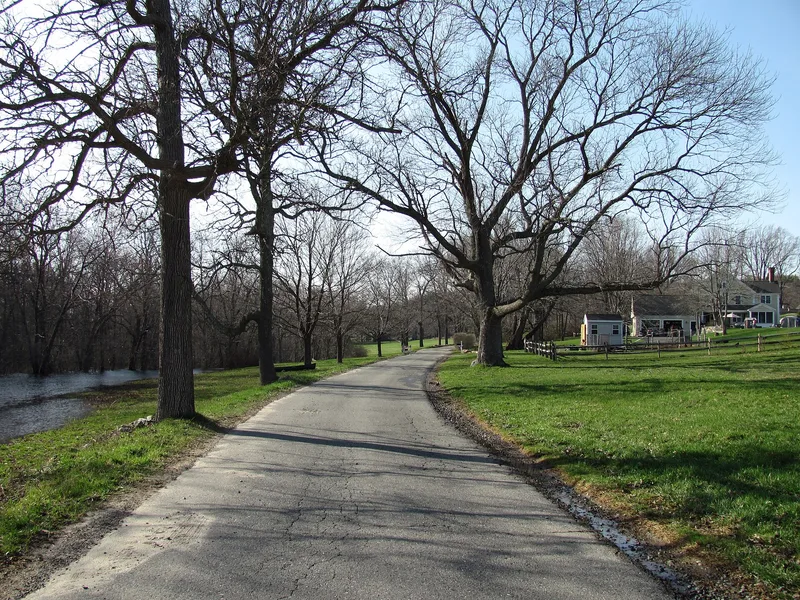
This rural district of about 450 acres lies just south of Topsfield village, laid out along River Road, Cross Street, Prospect Street and Salem Road beside the Ipswich River. It includes 52 contributing buildings, structures and sites: farmhouses, barns, a shoe shop, a cemetery, gardens, stone walls and open fields. The earliest building is the Zaccheus Gould House of 1670-1700, and the Lake family left a cluster of First Period and later houses and a very early barn in the northeast corner, known as Lake Village. Other landmarks include the Federal-style Perkins-Pingree house of 1807 and the Italianate Charles H. Lake House. The district matters because it shows how working farms of the 18th and 19th centuries became country retreats for wealthy families from Salem and Boston, often with landscape designs and architect-designed estate houses. Meadows, tree-lined roads and long views toward the river keep that pastoral setting intact, and some fields are still hayed or grazed.
Machine-generated summary. This summary was generated by a language model from the official nomination document and has not been reviewed line by line by an editor. It may contain errors. Check the source document before relying on any detail. Source: nomination document (PDF) · catalog entry. Generated October 2026 (model claude-sonnet-5-5, prompt v1.0-2026-10-29).
| Styles | Colonial: First Period, Georgian; Early Republic: Federal; Greek Revival; Italianate; Shingle Style; Colonial Revival; Bungalow/Craftsman |
|---|---|
| Areas of significance | Agriculture, Architecture, Community Planning and Development, Landscape Architecture |
| Acreage | 450 |
| Boundary source | NPS cultural-resource GIS polygon |
| Full listing page | River Road-Cross Street Historic District (property record) |
What listing means for this property
This is a historic district. Buildings within its boundary are either contributing (they add to the district's significance) or non-contributing. Owners of contributing income-producing buildings can claim the 20% federal rehabilitation tax credit; homeowners should look at state credits. National Register districts impose no design review by themselves; a local historic district ordinance, if one exists, does (the difference explained).
General information, not legal or tax advice. Rules change; confirm with your State Historic Preservation Office or a qualified adviser.