Richmond Furnace Historical and Archeological District

Why it's listed
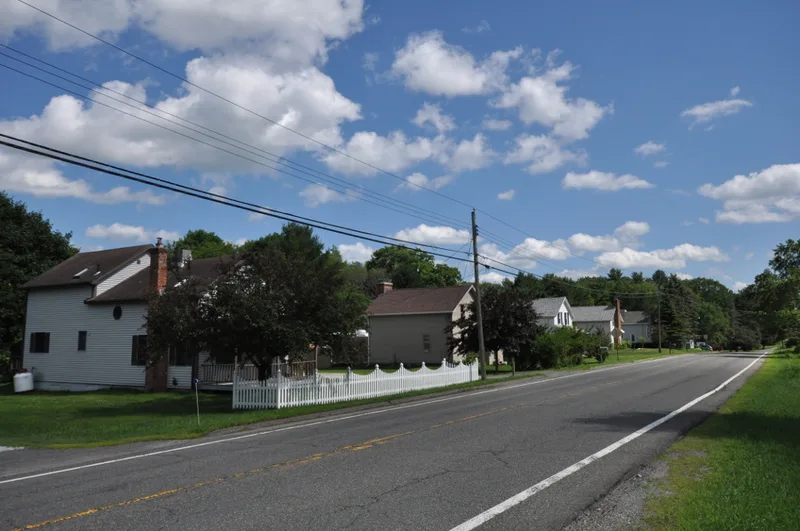
Richmond Furnace is a 290-acre district in southwestern Berkshire County, Massachusetts, centered on the remains of an iron-making complex that used charcoal to produce pig iron. The Richmond Iron Works blast furnace, built about 1829 and altered in 1905, is the focal point. Its squat, battered stack of Stockbridge marble stands 34 feet high and has pointed Gothic arches typical of furnaces built by the I.N. Bartram Company. Around it lie the traces of the whole production process: open-pit and shaft iron mines, ore crusher foundations, brick charcoal kilns, limestone flux quarries, dams, ponds and a headrace that supplied water power. Earlier sawmill and gristmill sites from the 18th century are also included. The district contains 28 contributing buildings, among them ironworker houses from about 1840 and 1873 on State Road, Furnace Lane and Furnace Road. Together, these resources record a long-running industrial community, and its payroll approached 700 workers in the late nineteenth century.
Machine-generated summary. This summary was generated by a language model from the official nomination document and has not been reviewed line by line by an editor. It may contain errors. Check the source document before relying on any detail. Source: nomination document (PDF) · catalog entry. Generated October 2026 (model claude-sonnet-5-5, prompt v1.0-2026-10-29).
| Styles | Federal, Greek Revival, Italianate (dwellings); Salisbury Iron District type blast furnace |
|---|---|
| Areas of significance | Historic - Non-Aboriginal, Architecture, Engineering, Industry |
| Acreage | 290 |
| Boundary source | NPS cultural-resource GIS polygon |
| Full listing page | Richmond Furnace Historical and Archeological District (property record) |
What listing means for this property
This is a historic district. Buildings within its boundary are either contributing (they add to the district's significance) or non-contributing. Owners of contributing income-producing buildings can claim the 20% federal rehabilitation tax credit; homeowners should look at state credits. National Register districts impose no design review by themselves; a local historic district ordinance, if one exists, does (the difference explained).
General information, not legal or tax advice. Rules change; confirm with your State Historic Preservation Office or a qualified adviser.