Revere Beach Parkway-Metropolitan Park System of Greater Boston

Why it's listed
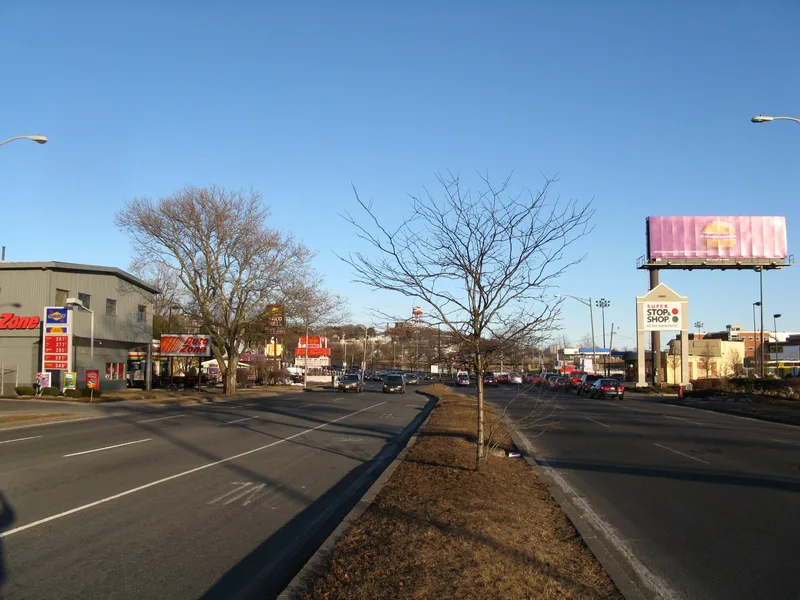
Revere Beach Parkway is a 5.3-mile boulevard crossing Medford, Everett, Chelsea and Revere, Massachusetts. Built between 1896 and 1904 and finished in 1905, it was laid out to link the inland areas north of Boston with the new Revere Beach Reservation. It follows the Malden River, Mill Creek and Sales Creek and skirts several glacial hills before ending at Eliot Circle. Over time the roadway was resurfaced, widened and reworked to handle growing automobile traffic, becoming a six-lane route with rotaries, overpasses and ramps. Many of the surviving features date from the 1950s, including the Woods Memorial Bridge over the Malden River, Sweetser Circle's overpasses and access ramps, and bridges with granite-faced parapets and MDC date plaques. Belgian-block curbing and scattered oaks, maples and sycamores remain along the route. The district includes 21 contributing structures and 3 noncontributing ones, and it is part of the Metropolitan Park System of Greater Boston.
Machine-generated summary. This summary was generated by a language model from the official nomination document and has not been reviewed line by line by an editor. It may contain errors. Check the source document before relying on any detail. Source: nomination document (PDF) · catalog entry. Generated October 2026 (model claude-sonnet-5-5, prompt v1.0-2026-10-29).
| Areas of significance | Community Planning and Development, Engineering, Landscape Architecture, Transportation |
|---|---|
| Acreage | 83.3 |
| Boundary source | NPS cultural-resource GIS polygon |
| Full listing page | Revere Beach Parkway-Metropolitan Park System of Greater Boston (property record) |
What listing means for this property
This is a historic district. Buildings within its boundary are either contributing (they add to the district's significance) or non-contributing. Owners of contributing income-producing buildings can claim the 20% federal rehabilitation tax credit; homeowners should look at state credits. National Register districts impose no design review by themselves; a local historic district ordinance, if one exists, does (the difference explained).
General information, not legal or tax advice. Rules change; confirm with your State Historic Preservation Office or a qualified adviser.