Rabbit Hill Historic District

Why it's listed
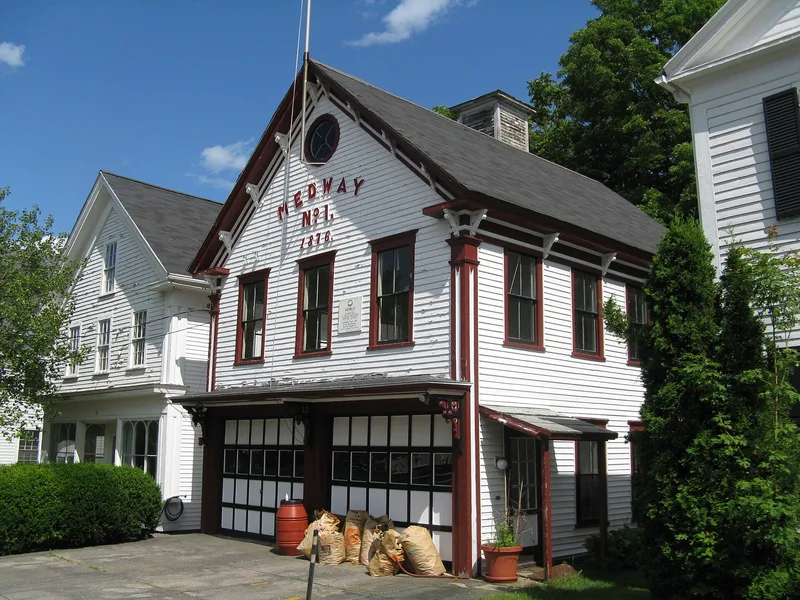
Rabbit Hill, in West Medway, Massachusetts, is a forty-acre neighborhood of 19th-century buildings arranged around the Second Congregational Church, built in 1814 at the top of the hill. The area was stony pastureland until the Hartford-Dedham Turnpike opened across it in 1810, the same year the Morocco Tannery became its first building. The church became the nucleus of a new settlement, and an early tavern served turnpike travellers. As West Medway's textile, shoe and straw goods industries grew, the hill housed factory owners and workers, along with small shoe shops, a commercial block, a fire house and a tailor shop later converted to a library. Of 65 buildings, most are Greek Revival or Federal, with a few Italianate, Second Empire and later Victorian examples. Little was built after about 1900, when industry moved to other villages, so the district keeps its 19th-century character. It was recognized for its local architectural importance and for its link to the growth of West Medway.
Machine-generated summary. This summary was generated by a language model from the official nomination document and has not been reviewed line by line by an editor. It may contain errors. Check the source document before relying on any detail. Source: nomination document (PDF) · catalog entry. Generated October 2026 (model claude-sonnet-5-5, prompt v1.0-2026-10-29).
| Period of significance | 1810-1899 |
|---|---|
| Styles | Greek Revival, Federal, Late Victorian |
| Areas of significance | Community Planning and Development, Architecture |
| Acreage | 40 |
| Boundary source | NPS cultural-resource GIS polygon |
| Full listing page | Rabbit Hill Historic District (property record) |
What listing means for this property
This is a historic district. Buildings within its boundary are either contributing (they add to the district's significance) or non-contributing. Owners of contributing income-producing buildings can claim the 20% federal rehabilitation tax credit; homeowners should look at state credits. National Register districts impose no design review by themselves; a local historic district ordinance, if one exists, does (the difference explained).
General information, not legal or tax advice. Rules change; confirm with your State Historic Preservation Office or a qualified adviser.