Providence Street Historic District

Why it's listed
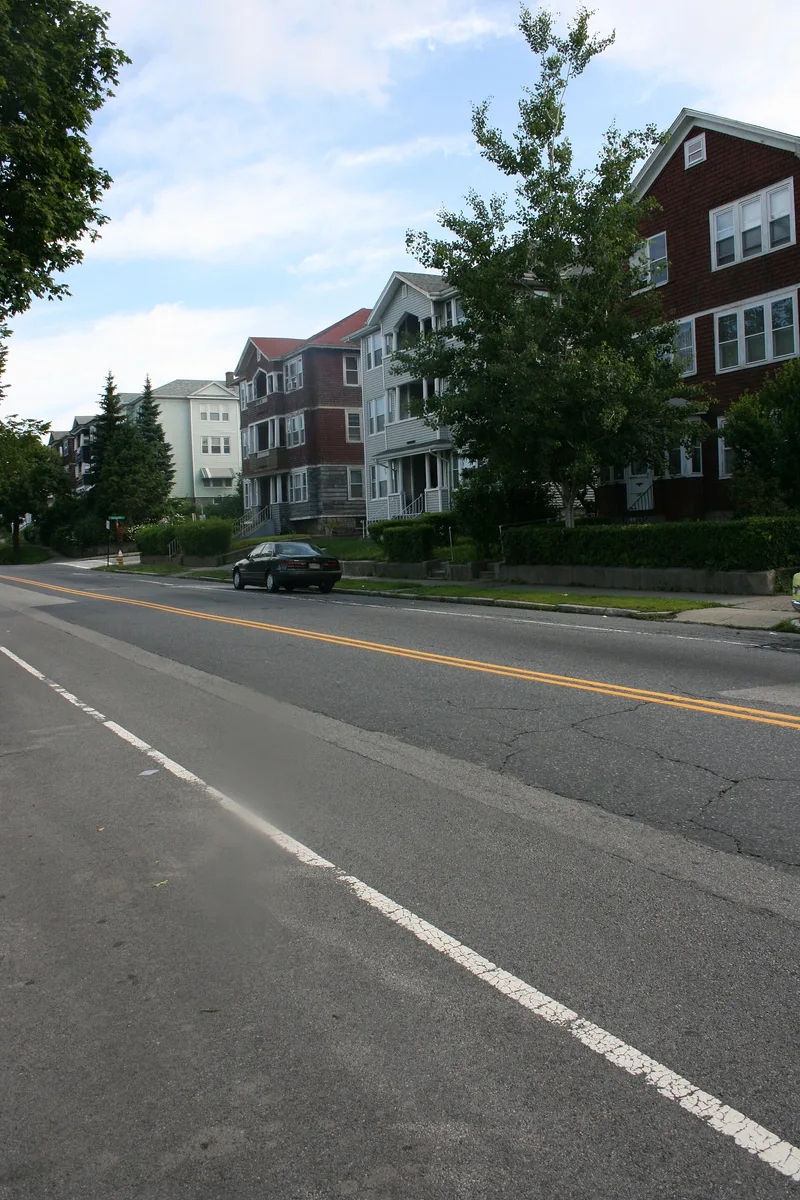
Providence Street in Worcester holds a row of ten three-decker houses and a set of cinder block garages, built between about 1926 and 1930 facing Gaskill Field, the Worcester Academy athletic field. The houses were probably built by the Dworman Building Company and mix Colonial Revival and Craftsman details, including three-tier front porches, hip roofs, triple windows and wood clapboard and shingle siding. Several sit on steep front yards that heighten their vertical form. Nine of the ten houses keep their original character; only 139 Providence Street lost it through modern siding. The street also reflects a social pattern. Many early residents were middle-class Jewish families who moved from the older Jewish neighborhood on lower Providence Street, and they worked as tailors, merchants, clerks and business operators, often near the Green Street business district. As one of the best-preserved groups from the final phase of three-decker building in the city, the district was listed for its architecture and its role in the city's neighborhood growth.
Machine-generated summary. This summary was generated by a language model from the official nomination document and has not been reviewed line by line by an editor. It may contain errors. Check the source document before relying on any detail. Source: nomination document (PDF) · catalog entry. Generated October 2026 (model claude-sonnet-5-5, prompt v1.0-2026-10-29).
| Styles | Craftsman and Colonial Revival (three-deckers) |
|---|---|
| Areas of significance | Community Planning and Development, European, Architecture, Social History |
| Acreage | 1.4 |
| Boundary source | NPS cultural-resource GIS polygon |
| Full listing page | Providence Street Historic District (property record) |
What listing means for this property
This is a historic district. Buildings within its boundary are either contributing (they add to the district's significance) or non-contributing. Owners of contributing income-producing buildings can claim the 20% federal rehabilitation tax credit; homeowners should look at state credits. National Register districts impose no design review by themselves; a local historic district ordinance, if one exists, does (the difference explained).
General information, not legal or tax advice. Rules change; confirm with your State Historic Preservation Office or a qualified adviser.