Pleasant Street Historic District

Why it's listed
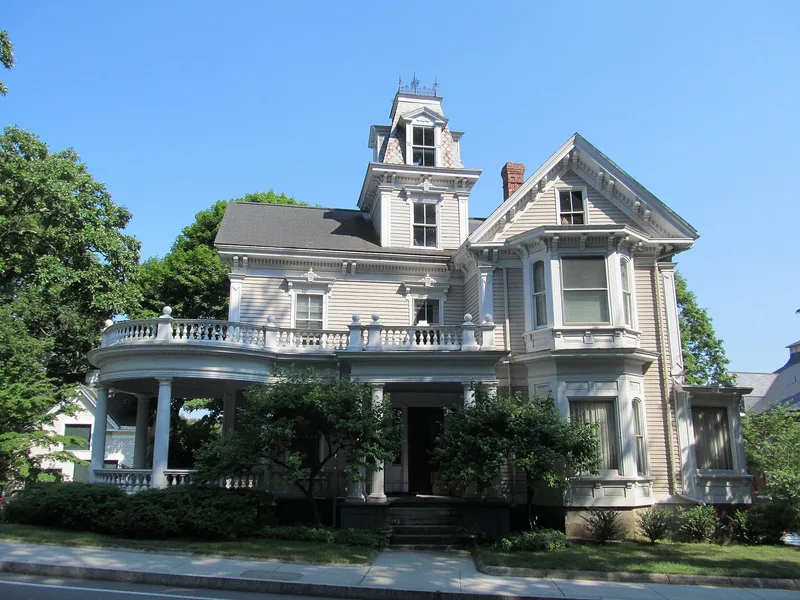
Pleasant Street in Belmont, seven miles northwest of Boston, preserves a neighborhood of sixty-eight buildings and two monuments, most of them nineteenth century houses. Georgian, Federal, Greek Revival, Italianate, Second Empire and Queen Anne styles appear along the route, with stone walls, shade trees and hillside lawns shaping the setting. The oldest building is the Captain Stephen Frost House, built about 1763. Landmarks include the 1881 Town Hall by Henry W. Hartwell, the 1902 Classical Revival Old Library by William R. Emerson, and the 1853 Italianate and Second Empire William Flagg Homer House. The street follows an old path from Arlington Center to Watertown. After rail service arrived, wealthy Boston merchants built summer and year-round homes here. Winslow Homer lived in the district and painted works here. Roscoe Pound, later Dean of Harvard Law School, lived in the Joseph Yates House, and David Mack founded the Orchard Hill boarding school. The district was listed for its architecture and these associations.
Machine-generated summary. This summary was generated by a language model from the official nomination document and has not been reviewed line by line by an editor. It may contain errors. Check the source document before relying on any detail. Source: nomination document (PDF) · catalog entry. Generated October 2026 (model claude-sonnet-5-5, prompt v1.0-2026-10-29).
| Styles | Georgian, Federal, Greek Revival, Italianate, Second Empire and Queen Anne |
|---|---|
| Areas of significance | Commerce, Art, Transportation, Education, Law, Politics/Government, Architecture, Invention, Agriculture |
| Acreage | 38 |
| Boundary source | NPS cultural-resource GIS polygon |
| Full listing page | Pleasant Street Historic District (property record) |
What listing means for this property
This is a historic district. Buildings within its boundary are either contributing (they add to the district's significance) or non-contributing. Owners of contributing income-producing buildings can claim the 20% federal rehabilitation tax credit; homeowners should look at state credits. National Register districts impose no design review by themselves; a local historic district ordinance, if one exists, does (the difference explained).
General information, not legal or tax advice. Rules change; confirm with your State Historic Preservation Office or a qualified adviser.